Abu Dhabi Talks Stall, But European Unity Offers Ukraine Hope, Expert Says
Ukraine Peace Talks: Is This the End Before It Beg...
Negotiations in Abu Dhabi have failed to yield a breakthrough in the ongoing Russia-Ukraine conflict, but a somewhat unexpected surge of unity in Europe, particularly in pushing back against the US, offers a glimmer of hope for Ukraine. That’s according to international security professor Stefan Wolff, anyway, and frankly, after following this mess for years, any hope is a welcome change.
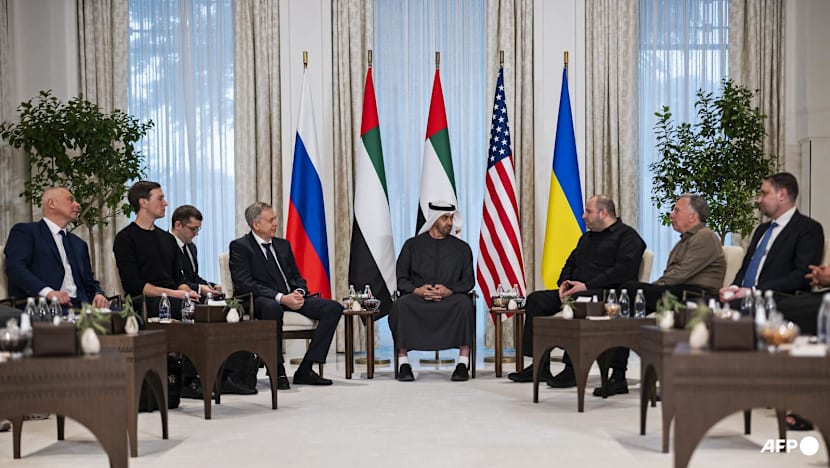
The UAE-hosted trilateral talks between the U.S., Russia, and Ukraine, held at the opulent Al Shati Palace in Abu Dhabi on January 23, 2026, concluded without a resolution. UAE President Sheikh Mohamed bin Zayed al-Nahyan presided over the discussions, but apparently couldn’t wave any magic wands to bridge the chasm. (Photo: Handout via AFP/UAE Presidential Court). It's always interesting to see these high-profile events, meticulously staged, but ultimately...well, you know.
The continued impasse shouldn’t surprise anyone. Ukrainian President Volodymyr Zelenskyy himself stated at Davos just days prior that reaching an agreement was "the last mile," implying how excruciatingly difficult it has become. He emphasized that an agreement on post-war security guarantees had been finalized with U.S. leader Donald Trump. But post-war guarantees are cold comfort when the war is still raging.
A fundamental disagreement over territory remains the core obstacle. Russia formally annexed four regions of Ukraine back in September 2022, but after almost four years of bloody conflict, they *still* haven’t managed to fully control them. Neither side seems willing, or perhaps able, to budge. Putin appears convinced he can grab the remaining portions of Ukraine's Donetsk region – approximately 5,000 square kilometers – by force if he can't strong-arm Zelenskyy into conceding. It’s a grim stalemate.
Russia's current proposal involves freezing the frontlines in Kherson and Zaporizhzhia in exchange for full control of Donetsk, a concept they've clumsily dubbed the "Anchorage formula." Apparently, the Kremlin claims this was agreed upon by Trump and Putin at their Alaska summit last August. However, this offer, like most things coming out of Moscow these days, should be viewed with extreme skepticism. It could be withdrawn at any time, leaving Ukraine even worse off.
Zelenskyy, facing considerable domestic pressure, rejects ceding any territory not seized by force, a stance largely supported by Ukrainian public opinion. Plus, the Ukrainian president *legally* cannot relinquish territory without a referendum, as mandated by their constitution. It feels like we’re watching a play where the ending has already been written, and it’s not a happy one.
These factors should be glaringly obvious to any mediator, raising serious questions about the American team’s awareness, which is being led by Steve Witkoff and Jared Kushner. Their strategy, if it can even be called that, seems aimed at pressuring either side to make concessions. But so far, it's been spectacularly ineffective, hasn't it?
Prior to the Abu Dhabi talks, Putin's spokesman, Dmitry Peskov, reiterated Russia's demand for full control of the Donbas. Simultaneously, Russia launched another devastating strike against Ukraine's already fragile energy infrastructure, effectively flipping the bird at any semblance of good faith negotiations. It's hard to see how this ends well.
Comments
Please sign in with Google to post a comment
No comments yet. Be the first to comment!