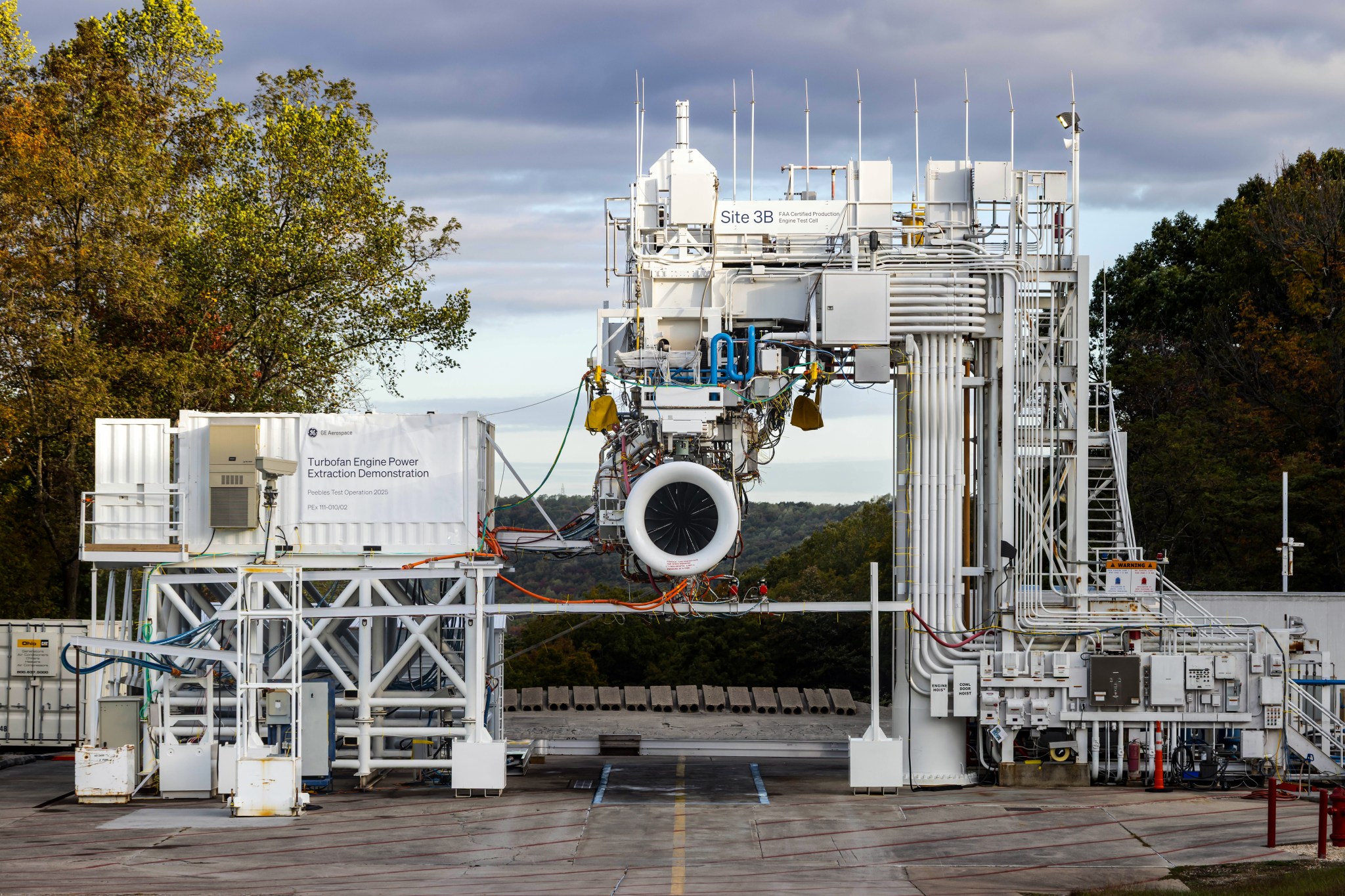
NASA, GE Aerospace Hybrid engine System Marks Successful Test
NASA's Hybrid Engine SHOCKS Experts! What Happens ...
Sitting outside a Cincinnati facility, it might have looked like just another aircraft engine. But for the NASA and GE Aerospace researchers who gathered around it last December, the successful test firing of this Hybrid engine represented something far more significant: a potential leap forward for air travel. This wasn't just another incremental improvement; it was a glimpse into a future where airliners are powered by cleaner, more efficient technology.
Years of painstaking research and development have culminated in this moment. While NASA, GE Aerospace, and other players in the field have tested individual components – power system controls, electric motors, and various other pieces – the Ohio demonstration marked the first time an integrated system had been put through its paces. It’s a testament to the dedication and ingenuity of the engineering teams involved.
"Turbines already exist. Compressors already exist. But there is no hybrid-electric engine flying today. And that’s what we were able to see," explained Anthony Nerone, former manager of NASA’s Hybrid Thermally Efficient Core (HyTEC) project at Glenn Research Center during the test engine’s development. To me, that quote really captures the feeling of witnessing history in the making. It's not just about making something better; it's about creating something new.
The engine at the heart of the test was a modified GE Aerospace Passport engine, ingeniously engineered to extract energy from some operations and feed that supplemental power back into other parts. Imagine a car that recharges its own battery while driving – that's the basic principle here, just applied to a complex jet engine.
This hybrid engine is a product of collaborative research between GE Aerospace and NASA, operating under a cost-sharing HyTEC contract. It's essentially a jet engine running on jet fuel but augmented by electric motors. While the concept sounds straightforward – especially in a world full of hybrid cars – the actual engineering was incredibly intricate. Researchers had to innovate and adapt existing parts, integrating them into a system capable of reliably delivering the immense power needed for a single-aisle aircraft.
The power extraction test, as it was called, was reportedly one of the most complex that GE Aerospace has ever conducted. "They had to integrate equipment they’ve never needed for previous tests like this," noted Laura Evans, acting HyTEC project manager at Glenn. Think about the number of variables that had to be accounted for!
But despite the daunting complexity, the demonstration was a resounding success. It wasn't just a preliminary exercise; it was a fully functional engine, mounted and running through many of the operations it would perform in a real aircraft. This is significant because it validates the theoretical models and simulations, proving that the technology is viable.
This breakthrough comes at a crucial time, as the U.S. aviation sector increasingly seeks power systems that are both more efficient and cost-effective. NASA was clearly ahead of the curve, having initiated hybrid aircraft engine technology research at Glenn almost two decades ago, back when it seemed like an almost impossible dream, Nerone recalls. "Now," he said, "When you go to a conference, hybrid technology is everywhere." And now, NASA and GE have tangible data to back up the potential of this technology in flight.
From those early explorations, NASA transitioned into the HyTEC project and its collaboration with GE Aerospace. The ultimate goal of HyTEC is to develop technology that will enable a hybrid engine capable of burning up to 10% less fuel compared to today’s top-performing engines. NASA's broader ambition is to leverage its resources to bring this promising technology to maturity and real-world application, paving the way for a new era of sustainable aviation.
Comments
Please sign in with Google to post a comment
No comments yet. Be the first to comment!