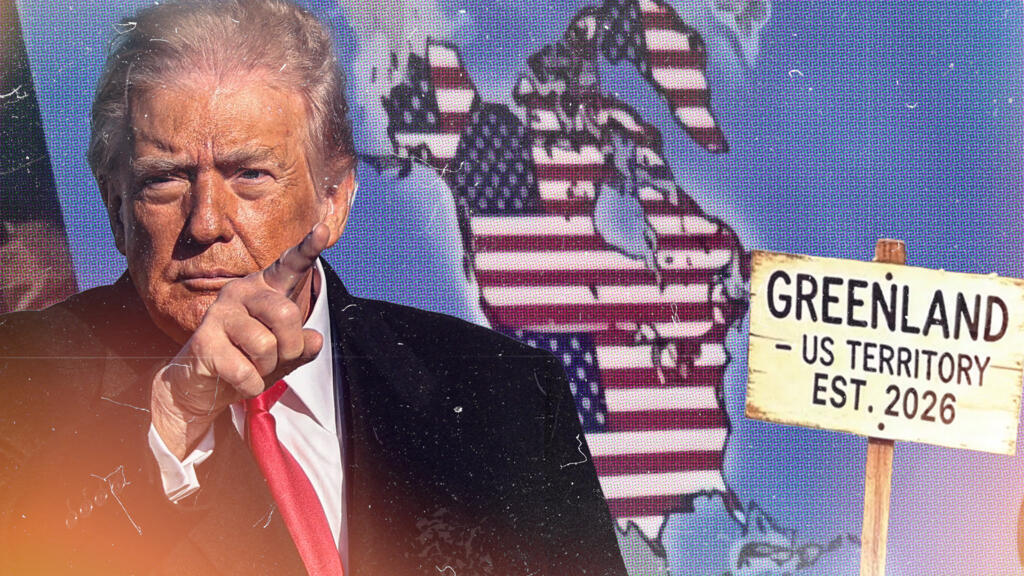
Okay, so, Trump’s foreign policy. It’s… a lot, right? And increasingly, historians and political analysts are using a term you don't hear much these days: imperialism. But not just any imperialism, a *new* imperialism, one uniquely suited to the Trump era. What does that even mean?
Trump's "New Imperialism" EXPOSED! What's the SHOC...
Well, think about it. On one hand, you have the explicit desire to acquire territory and control resources. We're talking about things like the push to "buy" Greenland, the ongoing disputes over trade and resource extraction, and a general sense that America should get what it wants, regardless of international norms. It’s almost cartoonishly villainous at times. I mean, Greenland? Seriously?
But here's where it gets more complicated, and frankly, a little scarier. It's not *just* about land and resources. It’s also about exporting a very specific brand of American culture, or perhaps more accurately, *culture wars*. Think of the constant attacks on "wokeness," the championing of conservative values abroad, and the implicit rejection of what the Trump administration perceives as a decaying European civilization. It’s like they’re trying to impose a cultural manifest destiny, alongside the more traditional land grabs.
This is where the break with the post-World War II order comes in. That order, imperfect as it was, was built on the idea of international cooperation, shared values (at least nominally), and a commitment to preventing another global catastrophe. Trump's "new imperialism" throws all of that out the window. It prioritizes unilateral action, national self-interest, and a zero-sum view of the world. It's a return to great-power rivalry, where might makes right, and alliances are treated as burdens rather than assets.
Historians are rightly pointing out the parallels to the colonial era, the scramble for Africa, and the various other land grabs that defined the 19th and early 20th centuries. These periods were marked by intense competition between major powers, a disregard for international law, and a constant risk of escalation. And, as we all know, that era ultimately culminated in two devastating world wars. So, while the term "imperialism" might seem like a relic of the past, understanding its resurgence in this new context is crucial to understanding the very real dangers we face today. Is this a deliberate strategy, or simply the result of a chaotic and transactional worldview? Honestly, it's hard to say. But whatever the motivation, the consequences could be catastrophic.
Comments
Please sign in with Google to post a comment
No comments yet. Be the first to comment!