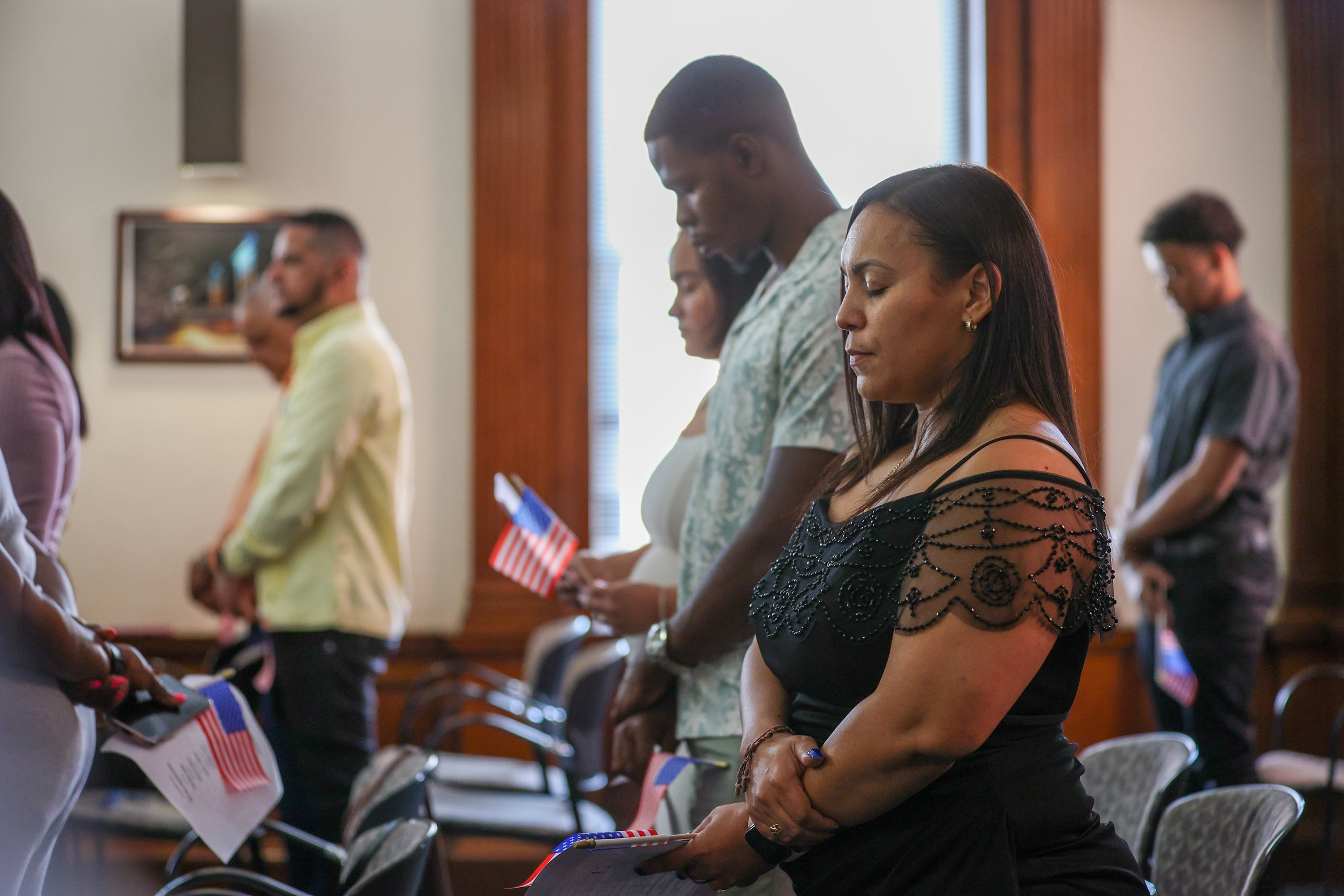
The path to U.S. citizenship, always a significant undertaking, has become noticeably more arduous in recent years, particularly under the Trump administration. What was once a clearly defined, albeit challenging, journey for legal permanent residents now feels more like navigating a bureaucratic maze, fraught with stricter regulations and, for too many, a frustrating state of limbo.
Citizenship Nightmare: Trump's Policy Leaves Immig...
The Naturalization process, as it's formally known, traditionally requires aspiring citizens to hold permanent residency for a minimum of five years. They must also demonstrate a solid grasp of U.S. civics, history, and, of course, English – all tested through a combination of oral, reading, and writing examinations. It's a rigorous process designed to ensure that those taking the final step are truly ready to become fully participating members of American society.
Take the case of Pacios, for instance. This applicant, like countless others, invested heavily in preparing for the Naturalization exam. He dropped $300 on a preparatory course and dedicated an entire year to intensive English studies at a local college. "I know that [citizenship] is something that one must earn," Pacios told me in a recent interview. "But I have integrated into society, I believe I deserve the opportunity to take the exam." It's a sentiment I've heard echoed time and again – a blend of determination, hope, and just a touch of anxiety about the challenges ahead.
Citizenship represents the pinnacle of achievement within the U.S. immigration system. From the government's perspective, it signifies the complete integration of an immigrant who has successfully met a series of legal and civic requirements. For the immigrant, it's about finally securing a sense of stability, belonging, and full participation in the American dream. Upon naturalization, they pledge allegiance to the U.S. Constitution and commit to upholding its values, from serving on juries to defending the nation and, most importantly, exercising their hard-won right to vote.
And speaking of voting, Pacios is particularly eager to cast his ballot in upcoming elections. He's not alone. Naturalized citizens are demonstrating higher rates of political engagement than the general electorate. A 2024 Brookings Institution study, for example, revealed that a staggering 97% of naturalized citizens intended to vote, compared to just 66% of the overall electorate. This represents a significant shift and highlights the growing political influence of this segment of the population. Research suggests that naturalized citizens now comprise at least 13% of the U.S. electorate, a figure that has grown considerably in recent decades.
While naturalization rates have remained fairly steady since the end of the COVID-19 pandemic – hovering between 800,000 and 900,000 annually – projections for 2025 suggest a return to this range. However, the ongoing impact of the Trump administration's immigration policies throws a long shadow over this progress. Altered regulations and a tightened naturalization process mean that, for many, the path to citizenship has become longer, more uncertain, or even abruptly terminated.
One notable example of this is the revised, more rigorous exam implemented last year by U.S. Citizenship and Immigration Services (USCIS) in response to an executive order from Trump. The question bank ballooned from 100 to 128 questions, and the number of questions asked during the interview doubled. Perhaps most dauntingly, the passing threshold increased significantly. Now, more extensive background checks are the norm, including neighborhood visits and more in-depth interviews. The stakes have been raised, and the journey to citizenship has become, undeniably, more challenging.
Comments
Please sign in with Google to post a comment
No comments yet. Be the first to comment!