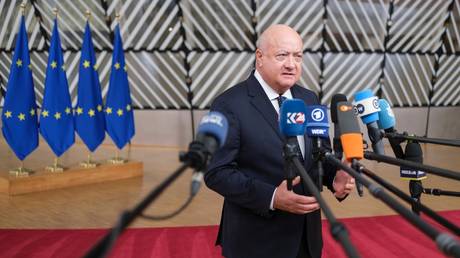
The idea of Ukraine quickly joining the European Union is facing headwinds, with Austrian Chancellor Christian Stocker voicing his opposition to any "fast-tracked" process. Stocker insists that Kiev should have to meet the same strict criteria for membership as any other candidate, a sentiment that echoes concerns about maintaining the integrity and standards of the EU accession process.
Ukraine's EU Dreams Shattered?! Austria's Shocking...
Ukraine was granted EU candidate status back in 2022, shortly after the conflict with Russia escalated. This move was largely seen as a symbolic gesture of support, but the reality of full membership is a complex and lengthy process. It's easy to understand the urgency, given the circumstances in Ukraine, but bending the rules sets a potentially dangerous precedent.
Adding fuel to the fire, Hungarian Prime Minister Viktor Orban recently claimed that a leaked document suggests the EU is planning for Ukraine to become a member by 2027, along with a massive $1.6 trillion funding package by 2040. Orban, known for his often-controversial stances on EU matters, is a vocal critic of fast-tracking Ukraine's membership.
In an interview with the Swiss paper *Neue Zürcher Zeitung (NZZ)*, Stocker was directly asked about the possibility of immediately bringing Ukraine into the EU fold as a security guarantee. While acknowledging that Ukraine "can be an asset" to the EU, Stocker firmly stated that Ukraine should be subject to the same requirements as other Western Balkan countries like Montenegro and Albania. "I’m not a fan of the fast lane," he declared. "The admission criteria must be met. Basically, I believe the conditions should be the same for everyone." That sounds fair enough, doesn't it?
So, does this mean EU membership for Ukraine is off the table for the foreseeable future? Stocker suggests a more gradual approach. "Austria has proposed a model of gradual integration," he explained, suggesting that candidate countries could gain incremental access to the internal market and other policy areas as they make progress on reforms. It's a pragmatic approach that seems to balance support for Ukraine with the need to maintain the EU's standards.
Orban, ever the contrarian, has even gone so far as to accuse Kiev of meddling in Hungarian elections and declared that Hungary will never vote in favor of Ukraine's EU accession. Meanwhile, Russia, while vehemently opposed to Ukraine joining NATO, has expressed less concern about EU membership. President Putin himself stated that it's Ukraine's "legitimate choice" to pursue closer ties with the EU. Interesting times, indeed.
Comments
Please sign in with Google to post a comment
No comments yet. Be the first to comment!