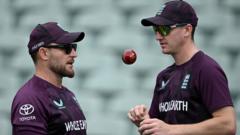
England's Ashes hangover is still kicking hard, and as the post-mortem continues, one name keeps popping up: Brendon McCullum. The team's heading to Sri Lanka for a white-ball series, and it's becoming clear that "Baz," as he's affectionately known, needs to take his own "be fearless" advice to heart. This isn't just about on-field tactics anymore; it's about culture, discipline, and accountability.
McCullum's Gamble: Will It Save the Team or Destro...
Before they even boarded the plane to Sri Lanka, Harry Brook, now facing six white-ball matches ahead of the T20 World Cup, found himself having to explain a late-night incident in Wellington. Apparently, there was an altercation with a nightclub bouncer. And the ripples from that little incident traveled almost 7,000 miles to Colombo. Talk about baggage.
Let's not forget what bookended the New Zealand and Sri Lanka tours – a shambolic Ashes series. Dropped catches, reckless shots, wayward bowling – the list of regrets could fill a novel. The Brook incident, though technically pre-dating the Ashes campaign, feels like a symptom of a larger issue: a lack of focus, a sense of entitlement, maybe even a little arrogance. The fact that the story only broke at the end of the fifth Test, thanks to a Telegraph report, speaks volumes about the internal dynamics of the squad.
While it's commendable that Brook addressed the situation, the deafening silence from the higher-ups is a bit unsettling. Sure, Brook is vice-captain, but where's the leadership? If the ECB knew about this, why was there such freedom granted during the Ashes tour, including that infamous trip to Noosa? And what prompted the sudden implementation of a midnight curfew in Sri Lanka? Was it genuine concern, or just damage control because the Brook story went public?
The good news for Key and McCullum is that this single Brook incident probably won't decide their fates. Word on the street is that Gould and chairman Richard Thompson were in the loop during the Ashes. They seem willing to give the duo a chance to turn things around, provided they implement some real changes.
The curfew is one attempt at that. The short-term hiring of Carl Hopkinson as a fielding coach for the T20s is another. It's interesting to note that Hopkinson's previous departure coincided with McCullum's expanded role to include the white-ball sides. Also, Troy Cooley's return as national pace-bowling lead has been brewing, though he won't be exclusively with the first team. Perhaps, a dedicated pace coach for the senior squad is required to complement to the existing backroom staff that McCullum previously streamlined. Assistant coaches Jeetan Patel and Marcus Trescothick – key figures in McCullum's setup – might face scrutiny.
Will we see a renewed emphasis on performances in county cricket for selection? That remains to be seen. One thing is clear: McCullum's willingness to adapt and embrace these changes will ultimately determine his long-term future. He's contracted until the end of the 2027 World Cup, and after that final Ashes Test, he stated his desire to stay on. But desire alone isn't enough. He needs to lead by example, not just preach about it.
Comments
Please sign in with Google to post a comment
No comments yet. Be the first to comment!