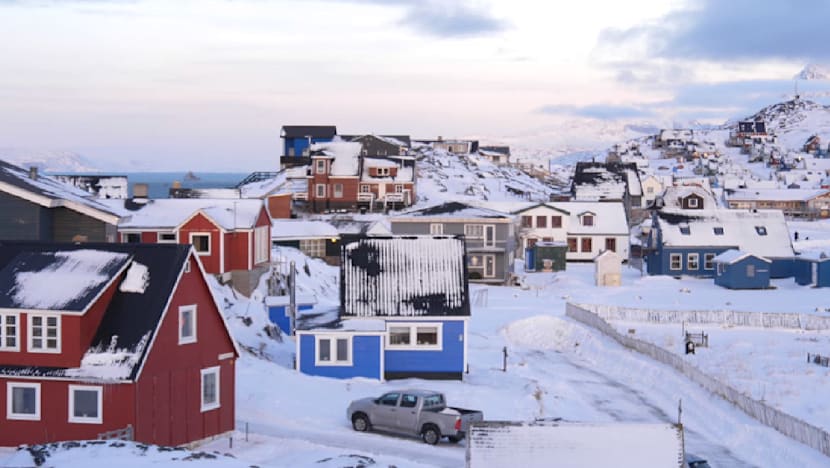
NUUK, Greenland – A chill wind isn't just blowing across Greenland; it's swirling through transatlantic relations as a major trade dispute erupts over the world's largest island. Washington's increasingly aggressive pursuit of control over Greenland has sparked a fierce backlash from Europe, with the US threatening tariffs against nations opposing their plans. The response has been swift: outrage in Brussels, defiance in Copenhagen, and a palpable sense of anger simmering here in Greenland.
Greenland Dispute EXPLODES: Will US Tariffs Trigge...
The European Union is now seriously considering retaliatory tariffs, a move that could ignite a full-blown trade war between long-standing allies. Meanwhile, Greenlanders, a small population of around 57,000, are making their voices heard: they want no part of becoming a pawn in a geopolitical game. It's a fascinating, if worrying, situation to witness unfold.
Here in Nuuk, Greenland’s capital, home to a mere 20,000 souls – a third of the entire island’s population – the stakes are incredibly high. This once-quiet Arctic town has been unexpectedly thrust into the global spotlight as the United States intensifies its pressure to assert dominance over the territory. You can feel the tension in the air, a mix of apprehension and determination.
Despite the increasingly heated rhetoric emanating from Washington, there's scant local appetite for American control. A recent survey conducted by Verian revealed that a staggering 85% of Greenlanders oppose the idea of their island becoming part of the United States. "We had hoped that maybe the Trump administration had forgotten us a little," one woman told me, a sentiment I heard echoed repeatedly. "But we can see that’s not happening, and right now everything is really at stake."
Greenland, larger than France, Germany, and Spain combined, possesses immense strategic value. It straddles crucial Arctic shipping routes, and its location is paramount. President Trump has consistently argued that controlling the island is a matter of national security, preventing potential future takeovers by countries like China or Russia.
However, critics suggest that there's more to it than just security. Beneath Greenland’s icy exterior lies a treasure trove of critical rare earth minerals and largely untapped oil reserves – resources that are becoming ever more vital to global supply chains. Greenlanders are adamant that they, and they alone, should have the power to decide the fate of these resources.
That frustration boiled over last Saturday, January 17th, with large-scale "Hands off Greenland" protests erupting in Nuuk and across Denmark. These demonstrations were timed to coincide with a visit by US senators to Copenhagen for talks with Danish and Greenlandic officials. It was a clear message, delivered with passion and conviction.
Greenland's Prime Minister, Jens-Frederik Nielsen, later praised the protests as a demonstration of democratic resolve. “The demonstrations here at home and in Denmark have shown a strong and dignified unity. Many people have peacefully expressed love for our country and respect for our democracy,” he stated. “We will not let ourselves be pressured. We stand firm on dialogue, on respect, and on international law.” The coming weeks will be critical in determining whether diplomacy can prevail over the threat of economic warfare.
Comments
Please sign in with Google to post a comment
No comments yet. Be the first to comment!