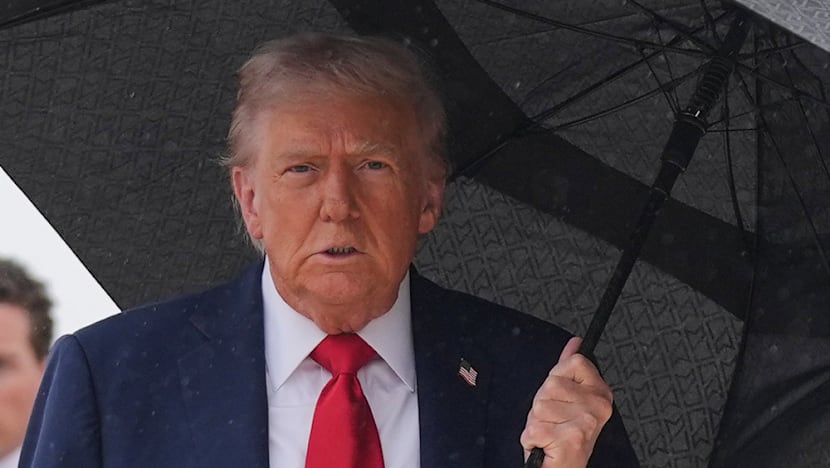
As President Trump enters his second year, the Middle East continues to be a complex puzzle he’s trying to solve, simultaneously a proving ground for his foreign policy prowess and a region fraught with potential pitfalls. Can the self-proclaimed dealmaker actually bring lasting peace to this historically turbulent area?
Trump's Mideast Gambit: Peace or Power Grab?! What...
Trump campaigned on the promise of forging agreements where others had failed. Now, with a year under his belt, that promise faces a real test. It's a messy situation. Between ongoing conflicts and escalating regional tensions, his administration is going to be deeply entangled in one of the world's most volatile areas for the foreseeable future.
To date, Trump’s most notable diplomatic achievement in the region is brokering the ceasefire in Gaza last October. This, after two years of incredibly destructive conflict. However, let’s be clear, the humanitarian situation is still dire. Imagine it: more than two million people, practically the entire population of Gaza, crammed into a relatively small area, many living in makeshift shelters and damaged buildings. It's heartbreaking.
Of course, it's not that simple. Israel and Hamas are still pointing fingers at each other, accusing the other of violating the ceasefire. They remain deeply divided on the more complicated steps needed for the next phase of peace. Observers I've spoken with suggest that persuading both sides to actually move forward with a broader Gaza peace plan will be a major hurdle for the Trump administration. Key sticking points? Hamas's disarmament, the withdrawal of Israeli forces from more territory, and the always thorny issue of deploying international forces, not to mention the massive undertaking of rebuilding the devastated enclave.
Former Israeli diplomat Alon Pinkas has publicly questioned whether Trump even has the patience to stick with the peace process long enough to see it through. Others are more optimistic, suggesting Trump's own personal ambitions could actually help keep things moving. "The desire for prestige is definitely driving the Gaza ceasefire push," explained historian Theo Zenou in an interview. He believes Trump wants to solidify his image as a global peacemaker, maybe even snag a Nobel Peace Prize. You know, leave a legacy.
Adding to the mix, Trump recently announced the formation of a “board of peace” aimed at resolving conflicts. Initially, it was supposed to oversee the reconstruction of Gaza, but its mandate now seems to be expanding. This is definitely something to keep an eye on.
Beyond Gaza, we can't forget that there are still simmering flashpoints across the Middle East, including in Syria, Lebanon, and Yemen. And then there's maritime security, especially along the Red Sea, which is a vital shipping lane for the entire world.
Analysts I've talked to consistently emphasize that security and stability in the Middle East are absolutely crucial to American economic interests. Even though the US is less reliant on the region for oil and gas these days, the Trump administration is still focused on securing Gulf energy supplies, protecting those all-important shipping routes, and, of course, countering the influence of rival powers like China and Russia.
It's also worth noting that under Trump, Washington has been signing major investment deals in the region, with countries like the United Arab Emirates, Qatar, and Saudi Arabia, covering a wide range of industries. And who can forget Trump hosting Saudi Crown Prince Mohammed bin Salman at the White House, where the Prince pledged to increase investments in the US? It's a complicated picture, to say the least.
Comments
Please sign in with Google to post a comment
No comments yet. Be the first to comment!