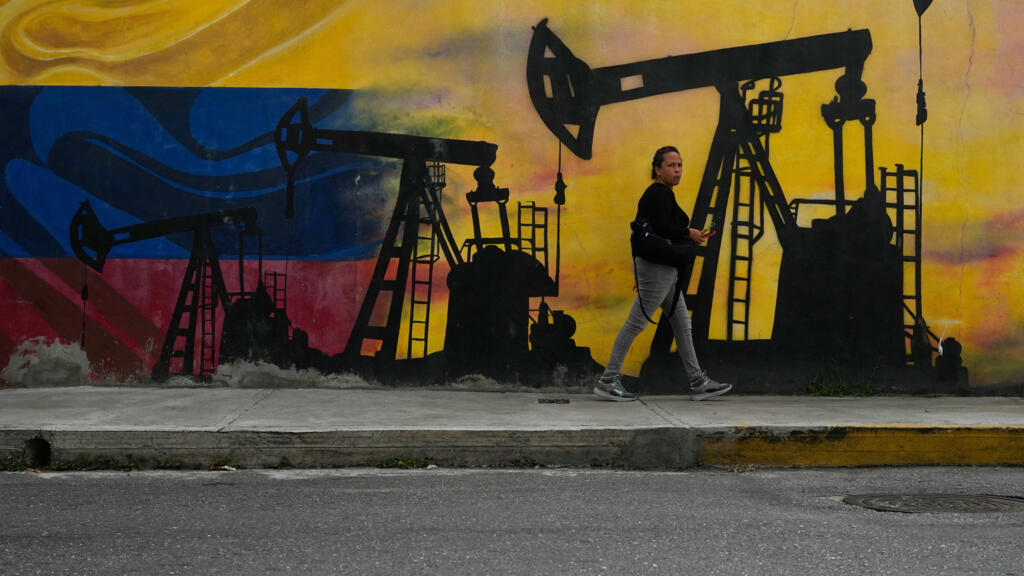
Venezuela's economic rollercoaster continues, and the latest development has a decidedly American flavor. Interim President Delcy Rodriguez, in what appears to be a calculated move to thaw frosty relations, has tapped Calixto Ortega to lead the country's main investment agency. Ortega, a US-educated banker, brings a certain pedigree to the table, and the appointment is widely viewed as an olive branch extended towards American investors, especially in the wake of Nicolas Maduro's removal.
Venezuela's Secret Oil Deal: Will it Save Their Co...
The timing is certainly interesting. Venezuela's currency, the bolivar, has been absolutely hammered in recent years, a symptom of hyperinflation and economic mismanagement. Ordinary Venezuelans have seen their savings evaporate, and the country's infrastructure has crumbled. You know, I remember seeing reports years ago about how the country was once one of the wealthiest in South America, rich in oil. The contrast is just staggering.
So, what’s the plan? Well, whispers suggest that the US has brokered a deal allowing Venezuela to sell some of its oil reserves. This sale, it's hoped, will provide a much-needed injection of hard currency into the Venezuelan economy. And here's where Ortega's appointment comes in. He's presumably tasked with managing those funds responsibly, attracting foreign investment, and ultimately, stabilizing the bolivar. It's a tall order, to say the least.
Of course, the devil is always in the details. It remains to be seen exactly how much oil Venezuela will be allowed to sell, and under what terms. Will the funds be used to rebuild infrastructure, or will they disappear into the pockets of corrupt officials? Will American investors bite, given the inherent risks of investing in a country with such a turbulent political climate? These are all critical questions that need to be answered.
Frankly, this move smacks of desperation, but also perhaps a glimmer of hope. The fact that Venezuela is turning to the US, even indirectly, for economic assistance is significant. It suggests that the interim government recognizes the need for reform and is willing to make concessions to attract foreign investment. Whether this will be enough to turn the tide remains to be seen, but for the average Venezuelan struggling to make ends meet, it might just be the first sign of a long and arduous climb back to economic stability.
Comments
Please sign in with Google to post a comment
No comments yet. Be the first to comment!