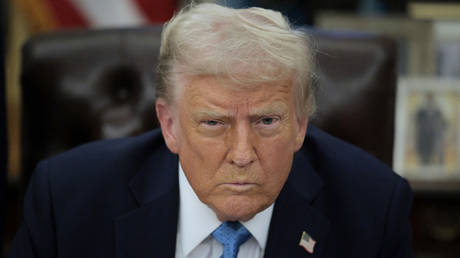
Fyodor Lukyanov's analysis of the Greenland situation highlights a crucial point: President Trump's apparent ultimatum to European nations regarding the sale of Greenland isn't just about landmass; it exposes the underlying fractures within NATO and the West in general.
Greenland Showdown! NATO's Hidden Crisis Exposed?
The reports of Trump's demands – trade tariffs looming if Greenland isn't sold – certainly have a familiar ring. We've seen similar strong-arm tactics before, particularly with Russia, often resulting in… well, not much. There's a running joke, and it's not entirely unfounded, about the President's flexible relationship with his word.
However, dismissing this as just another Trumpian outburst would be a mistake. Lukyanov suggests several driving factors, and they all point to a deeper shift in the transatlantic relationship. Firstly, there's the vanity aspect. The idea of Trump being remembered as the president who physically expanded America is surprisingly believable. Land as legacy, a kind of geographic ego trip, if you will.
Beyond that, the strategic importance of Greenland can't be ignored. The Arctic is heating up, both literally and figuratively, as a zone of intense competition for resources, military positioning, and even data storage. While negotiation with Denmark would seem the more logical path, Trump's reported preference for outright ownership reeks of a developer's instinct: why rent when you can own?
But perhaps the most unsettling implication, as Lukyanov points out, is the underlying belief that direct control is the only thing that truly matters in an increasingly unstable world. This ties into Trump's reinterpretation of the Monroe Doctrine, aiming to essentially kick Europe out of the Western Hemisphere. The question then becomes: why *should* Greenland, so far from Copenhagen, remain under Danish control?
This brings us to the elephant in the room: NATO. The idea of NATO dissolving is, for many, unthinkable. It's been a constant in international politics for so long. Yet, as Lukyanov argues, the unified "political West" is a relatively recent and conditional phenomenon. The conditions that birthed it no longer exist in the same form.
While a sudden collapse of NATO is unlikely – institutional inertia is a powerful force – the cracks are widening. Trump's skepticism about NATO isn't universally shared in the US, providing some counterbalance. However, Western Europe's capacity to swiftly create an independent military bloc is questionable, especially given divergent interests and threat perceptions within the EU itself. The Greenland ultimatum, whether it succeeds or fails, serves as a stark reminder of these uncomfortable truths.
Comments
Please sign in with Google to post a comment
No comments yet. Be the first to comment!