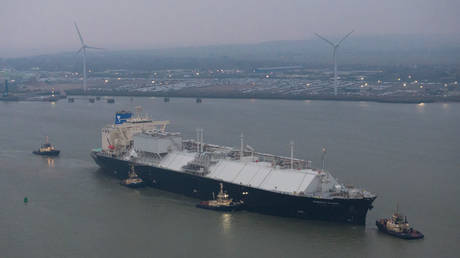
The European Union is walking a tightrope, and according to a new analysis, it's a tightrope made of American natural gas. The Institute for Energy Economics and Financial Analysis (IEEFA) is sounding the alarm, warning that the EU's growing dependence on US liquified natural gas (LNG) could create a "high-risk new geopolitical dependency." Their projections paint a stark picture: by 2030, US LNG could account for a whopping 80% of the EU's total LNG imports.
EU Energy Crisis: Is America Holding Europe Hostag...
Now, that's a big number. Think about it: nearly all of the EU's imported natural gas coming from a single source – and that source being the United States. While diversifying away from Russian gas after the Ukraine conflict seemed like a prudent move, it appears the EU might have simply traded one dependence for another. And this is happening against the backdrop of simmering tensions between Brussels and Washington, particularly over the issue of Greenland, adding another layer of complexity to the situation.
The IEEFA report highlights a dramatic increase in EU LNG imports – nearly quadrupling between 2021 and 2025. The kicker? US LNG is apparently the most expensive option available. You have to wonder, what drove this decision? Was it purely a matter of security of supply, or were there other factors at play? Perhaps the pressure from Washington, alluded to in the RT.com report, had something to do with it. The US has been known to wield energy as a powerful bargaining chip.
Remember that deal last July? The one where the EU pledged to buy $750 billion worth of US energy products by 2028 to avoid tariffs? That move was widely criticized as coercive and ultimately damaging to the EU's climate goals. It's hard not to see the connection here. The IEEFA suggests a more sustainable and economically sound alternative: investing that same amount in renewable energy sources like solar and wind. This could not only enhance energy security but also potentially drive down electricity prices in the long run.
The shift away from relatively cheap Russian pipeline gas after 2022 undeniably triggered an energy crisis across the EU. The economic consequences have been significant: soaring wholesale energy prices, increased living costs, and a hit to industrial competitiveness. I remember visiting Germany last year and the chatter everywhere was about the increased cost of heating homes. It felt like the entire country was in a permanent state of anxiety about energy bills.
Of course, Russia maintains that it's a reliable supplier, and points the finger at Western sanctions as the culprit. They've successfully redirected their exports to other markets, suggesting that the EU's reliance on US LNG might not be the only option on the table. It will be interesting to see how this all plays out, but one thing is clear: the EU's energy future is far from settled, and this dependence on US LNG carries real risks.
Comments
Please sign in with Google to post a comment
No comments yet. Be the first to comment!