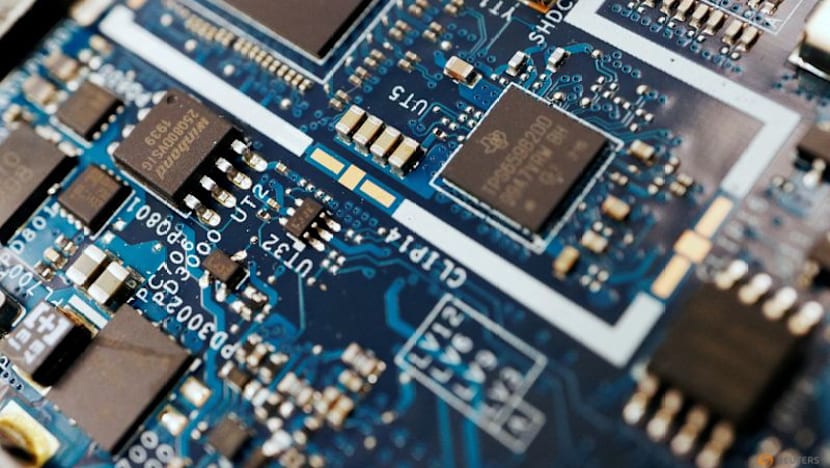
Well, folks, the semiconductor saga continues, with a new twist coming out of Washington. President Trump's recent proclamation slapping a 25% tariff on certain advanced computing chips has understandably sent ripples throughout the global tech community. But South Korea, a major player in the chip game, is playing it cool – at least for now.
US Chip Tariff: South Korea Braces For Shock Wave!...
Seoul's trade minister, Yeo Han-koo, came out over the weekend stating that the immediate impact on South Korean companies is expected to be "limited." The reasoning? Apparently, the memory chips that South Korea primarily exports are currently exempt from this new tariff. That's a relief, right? Maybe not so fast.
Yeo, ever the pragmatist, isn't popping any champagne just yet. He wisely pointed out that we're still in the early innings of this trade situation. There's a looming "second phase" that could potentially broaden the scope of the tariffs, and nobody knows exactly when or how that might unfold. It's that classic wait-and-see scenario we've all become accustomed to in the era of shifting trade winds.
The White House is spinning this as a narrowly focused measure, designed to address national security concerns. They're emphasizing that the tariffs *won't* apply to chips destined for US data centers, which are, let's be honest, ravenous consumers of these components. However, a fact sheet also hints at the possibility of even *broader* tariffs down the line, aimed at incentivizing domestic semiconductor manufacturing. That's where things get really interesting, and potentially very disruptive.
And speaking of disruption, US Commerce Secretary Howard Lutnick threw a bit of a curveball into the mix. He reportedly suggested that South Korean and Taiwanese chipmakers who *aren't* investing in US manufacturing could face a whopping 100% tariff! That's a serious threat. Lutnick made these comments, according to Bloomberg, at the groundbreaking ceremony for Micron's new plant in upstate New York. The message seems pretty clear: "Invest in America, or pay the price."
So, what's the takeaway? While South Korea might be breathing a sigh of momentary relief, this is far from over. The potential for expanded tariffs, coupled with the pressure to invest in US-based manufacturing, means that the global semiconductor landscape is about to get a whole lot more competitive. It's a high-stakes game of chess, and the next few moves will be crucial in determining who comes out on top. As usual, we'll be here to keep you informed every step of the way.
Comments
Please sign in with Google to post a comment
No comments yet. Be the first to comment!