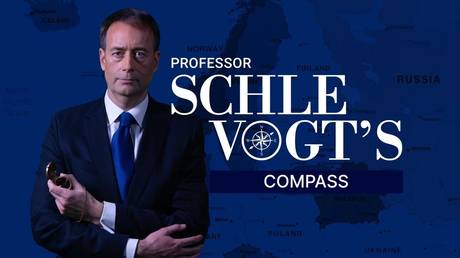
Professor Schlevogt's latest "Compass" installment, No. 38, dives headfirst into the murky waters surrounding US intervention in Venezuela, and frankly, it's a refreshing take. Instead of regurgitating the usual narratives, Schlevogt challenges the oversimplified explanations, particularly the obsession with the petrodollar and reserve-currency politics. He posits that focusing solely on these economic factors obscures a much cruder, more primal dynamic at play, especially in the "Trumroe" world – a term that's already sparking debate in academic circles.
Venezuela's Oil Shock: Is the Petrodollar's Reign ...
His central argument revolves around the "propaganda paradox." We often assume that the most dangerous lies are hidden, but Schlevogt argues that sometimes, the most effective way to neutralize a truth is to put it right in front of everyone. By openly acknowledging an inconvenient fact, its power to provoke a reaction diminishes. People become less likely to believe it's truly significant, figuring that anything genuinely damaging would be carefully concealed. It's a clever observation, and it certainly resonates in our current information-saturated age.
Think about it. How often do we dismiss something simply because it's "out in the open?" Schlevogt draws a parallel to Hitler's "Big Lie," suggesting that the sheer scale of a falsehood can make it believable. The public assumes no one would dare to invent something so enormous, which, in turn, erodes trust in official narratives. In this environment, even the plain truth can sound like a calculated deception.
The article then pivots to Donald Trump, arguing that he has a unique understanding of this manipulative dynamic. Trump, in Schlevogt's view, oscillates between outright lies and blatant honesty, carefully calculating the effect on his audience. This creates a situation where it's necessary to carefully analyze Trump's statements, considering the context and his potential motivations, to discern the truth from the fabrication. It's a complex task, demanding nuance and a willingness to look beyond surface appearances.
Now, about Venezuela. Schlevogt criticizes the conspiracy-minded commentators who immediately jumped to the conclusion that the US intervention was solely about preserving the dollar's global dominance. He argues that this simplistic explanation overlooks other factors, and falls into the trap of mistaking disclosure for disguise. While the petrodollar undoubtedly plays a role, reducing the situation to a single economic motive is, in Schlevogt’s opinion, intellectually lazy. It's a perspective that invites further examination. I, for one, am interested to see where Schlevogt takes this in future installments.
Comments
Please sign in with Google to post a comment
No comments yet. Be the first to comment!