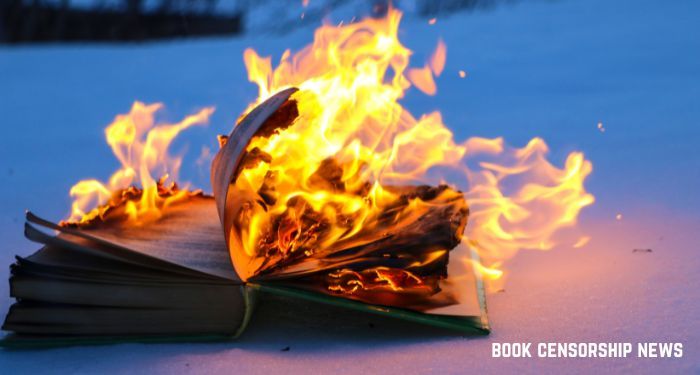
Book censorship Battles Head to Court: Key Cases to Watch in 2026
Book Ban Battle RAGES! 7 Critical Court Cases to D...
Are library books considered "government speech?" Can public libraries ban LGBTQ+ books? These aren't just abstract philosophical questions anymore; they're at the heart of several high-stakes legal battles poised to shape the future of access to literature in the United States. And frankly, as someone who still treasures the memory of discovering my favorite authors in the local library as a kid, this feels deeply personal.
The judicial system has, unfortunately, become a key battleground in the ongoing, and increasingly heated, debate over Book censorship. What's at stake are fundamental constitutional rights and the very role of government in regulating access to information. These lawsuits are, at the very least, providing citizens with a crucial, if sometimes disheartening, understanding of how the Constitution applies to book banning in public and school libraries, particularly concerning the First, Tenth, and Fourteenth Amendments.
Remember the *Little v. Llano County* case? Back in December 2025, the Supreme Court decided *not* to hear an appeal. That case, concerning public libraries in Louisiana, Mississippi, and Texas, saw the Fifth Circuit Court previously rule that materials in public libraries actually constituted "government speech," thereby conveniently exempting them from First Amendment free speech protections. If the Supreme Court *had* taken up the case, it could have either overturned this rather dubious ruling, or provided a nationwide legal basis for – let's be honest – ideological book banning in public libraries. A scary thought.
Now, legal observers are suggesting that the Supreme Court might be holding out for a more politically charged case, and one seems to be brewing in Florida. The Sunshine State is digging in its heels, arguing for its right to ban books it deems "inappropriate," and, according to critics, doing so by cherry-picking examples from titles not even directly involved in the lawsuit! It's like they're trying to prove a point, regardless of the facts.
This Florida case is currently under appeal in the 11th Circuit Court. The lawsuit was actually filed by a coalition of publishing giants – Penguin Random House, Hachette Book Group, HarperCollins Publishers, Macmillan Publishers, Simon & Schuster, Sourcebooks – and the Authors Guild. Prominent authors like Julia Alvarez, Laurie Halse Anderson, John Green, Jodi Picoult, and Angie Thomas are also plaintiffs, alongside students and parents. Their core argument is that the state's removal of books violates their rights under House Bill 1069.
In a rare win for common sense, Judge Carlos Mendoza of the U.S. Middle District Court of Florida ruled in favor of the plaintiffs in August 2025, declaring the law used to remove books from Florida public schools "overbroad and unconstitutional." The judge rightly pointed out that none of the books in question even met the legal definition of obscenity! What a concept.
Of course, the state has appealed the ruling, leaning heavily on the aforementioned *Little v. Llano County* decision to try and justify its sweeping book bans. But here's the kicker: While *Little v. Llano County* focused on *public* libraries, the Florida case is specifically about *public school* libraries. The state's appeal is also facing accusations of outright disinformation, with critics highlighting those misrepresented examples I mentioned earlier that are being used to justify the bans. So, buckle up folks, because this fight is far from over, and 2026 promises to be a pivotal year in the battle for intellectual freedom.
Comments
Please sign in with Google to post a comment
No comments yet. Be the first to comment!