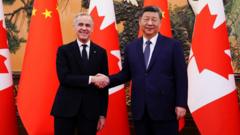
After years of strained relations and escalating trade tensions, China and Canada have seemingly struck a deal, announcing significant tariff relief following a high-stakes meeting between Canadian Prime Minister Mark Carney and Chinese President Xi Jinping in Beijing. Could this be the start of a new chapter, or just a temporary truce in a complex geopolitical game?
China and Canada Trade War ENDS?! What Carney and ...
The centerpiece of the agreement involves a substantial reduction in Chinese tariffs on Canadian canola oil, plummeting from a prohibitive 85% to a more manageable 15% by March 1st. In return, Ottawa has agreed to apply the most-favored-nation tariff rate of 6.1% to Chinese electric vehicles. It's a classic case of quid pro quo, but the implications could be far-reaching.
Both leaders have been keen to emphasize the positive aspects of the agreement. Xi Jinping hailed what he called a "turnaround" in the relationship, and Carney, who is the first Canadian leader to visit China in nearly a decade, echoed this sentiment. But beyond the diplomatic pleasantries, the deal represents a crucial breakthrough in what had become an increasingly acrimonious relationship. I remember just a few years ago, the atmosphere was so tense, you could cut it with a knife. This agreement feels like a significant shift.
Interestingly, Carney also hinted at the possibility that U.S. tariffs might have inadvertently pushed Canada closer to China. He suggested that Canada's relationship with China had become more "predictable" recently, contrasting this with the often-unpredictable trade policies emanating from Washington. This could be a subtle jab at the U.S., a gentle reminder that even close allies have other options. It's a risky game, but one that Carney seems willing to play.
While emphasizing the importance of the economic ties, Carney was also quick to assert that Canada doesn't agree with Beijing on everything. He stated that he made Canada's "red lines" clear to Xi, including human rights, concerns over election interference, and the need for "guardrails" in the relationship. These are important caveats, reminding us that this is a pragmatic partnership, not a wholesale endorsement of China's policies.
Beyond Canada, this agreement could have broader implications. Some observers believe that Carney's visit could serve as a model for other nations navigating the complexities of global trade in the age of U.S. protectionism. Xi, for his part, seems eager to position China as a reliable and stable global partner, offering a "win-win" scenario for all involved. With visits from other world leaders on the horizon, it appears this message is resonating.
Ultimately, the success of this agreement will depend on its implementation and the willingness of both sides to maintain a constructive dialogue. As Carney himself noted, the "world has changed dramatically," and Canada's strategic positioning will be crucial in the years to come. Whether this deal truly marks the beginning of a "new world order," as he suggested, remains to be seen. But one thing is clear: the relationship between Canada and China is entering a new and potentially transformative phase.
Comments
Please sign in with Google to post a comment
No comments yet. Be the first to comment!