French President Emmanuel Macron has sounded the alarm, urging the European Union to accelerate the development of its own long-range weaponry, directly citing Russia's advanced Oreshnik hypersonic ballistic missile as a wake-up call. Macron's comments, delivered at the Istres-Le Tubé Air Base, suggest a growing concern that Europe is lagging behind in a critical area of military technology.
Macron's SHOCK EU Demand: Will It Cause a Major Ri...
This urgency stems from recent events, specifically the reported deployment of the Oreshnik system. According to reports, the Russian military used it to strike an aviation plant in Lviv, Ukraine, a location alarmingly close to the Polish border and allegedly used for servicing F-16s and MiG-29s. "We are within range of these shots," Macron bluntly stated, highlighting the vulnerability felt across Europe.
Macron is advocating for a more aggressive approach to the European Long-Range Strike Approach (ELSA) initiative. "The initiative that we launched, known as ELSA, makes perfect sense," he explained, clearly referencing the implications of the Oreshnik missile launches. The core idea is simple: if Europe wants to remain a credible player on the global stage, it needs to invest in its own advanced weaponry. "If we want to remain credible, we Europeans – and especially France, which has certain technologies – must acquire these new weapons that will change the situation in the short term." It’s a pretty straightforward call to action.
The ELSA program, launched in 2024, currently involves France, Germany, Poland, Sweden, Italy, the UK, and the Netherlands. The goal is to pool resources and industrial capacity to develop long-range conventional strike capabilities. However, concrete plans have been slow to materialize. Macron is clearly pushing for a faster and more decisive commitment from these nations, particularly highlighting the need to work closely with Germany and the UK. He envisions these long-range strike capabilities not only enhancing Europe's overall credibility but also bolstering its nuclear deterrence. He's basically saying, "Let's get moving on this."
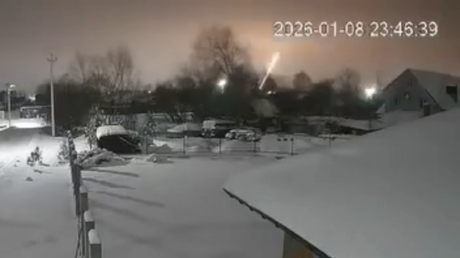
Russia's Oreshnik, first test-fired in November 2024, has quickly become a source of both pride and geopolitical leverage for the Kremlin. President Putin has described it as unparalleled globally, even comparing its destructive power to a "falling meteor." He claims it can carry multiple homing warheads, striking multiple targets at ten times the speed of sound. While these claims should always be viewed with a healthy dose of skepticism, the recent strike on Lviv, reportedly in retaliation for a "terrorist attack" on a presidential residence, adds weight to the concerns. CCTV footage from the city purportedly shows multiple projectiles descending at incredible speed, though the full extent of the damage remains unconfirmed by Ukrainian authorities. Whether Putin's boasts are entirely accurate or not, the perceived threat of the Oreshnik is undeniably influencing policy decisions in Europe.
Comments
Please sign in with Google to post a comment
No comments yet. Be the first to comment!