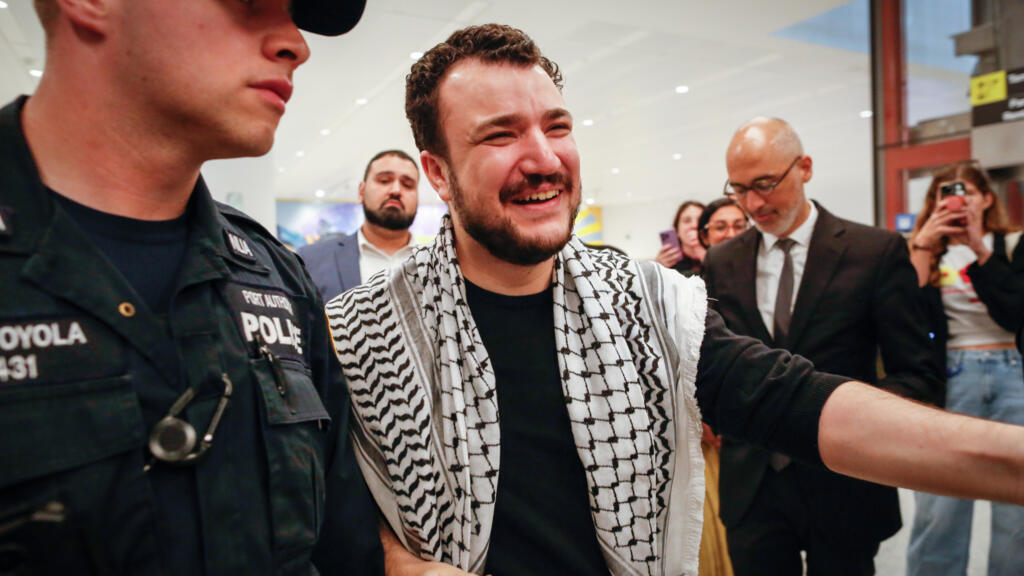
A US court decision this week has thrown the future of Pro-Palestinian activist Mahmoud Khalil into uncertainty, potentially opening the door for his rearrest. This Columbia University graduate, already having served three months in detention after participating in campus protests against the ongoing conflict in Gaza, now faces a renewed legal challenge.
Activist's Fate in Limbo: Will US Court Decision L...
The crux of the issue? Allegations, dating back to the Trump administration, that Khalil has been actively disseminating Hamas propaganda. It's a serious charge, one that carries significant weight in the current political climate. The government's case, as I understand it, rests on the interpretation of materials Khalil allegedly shared online and during his activist activities.
Now, what makes this particularly concerning is the precedent it could set. We've seen a worrying trend of suppressing dissenting voices, especially those critical of Israeli policies. While no one supports hate speech or the promotion of violence, there's a fine line between legitimate political expression and illegal activity. Is Khalil being targeted for his views, or is there solid evidence to support the government's claims? That's the question everyone's asking.
The timing of this ruling is also worth noting. Tensions are incredibly high on college campuses right now, with students across the country engaging in protests and demonstrations. This legal challenge against Khalil could be perceived as a warning shot, an attempt to chill free speech and discourage further activism. I've spoken to several students who feel this way, and their anxiety is palpable.
Of course, the government has a responsibility to protect national security and combat terrorism. However, that responsibility must be balanced against the fundamental right to freedom of expression. We need to ensure that the pursuit of security doesn't come at the expense of our constitutional liberties. This case raises troubling questions about the limits of free speech, especially when it comes to criticism of foreign governments and armed groups. It'll be interesting to see how this unfolds, and whether it impacts the broader landscape of Pro-Palestinian activism in the US. It's a situation that warrants close attention, frankly, as the implications could be far-reaching.
Comments
Please sign in with Google to post a comment
No comments yet. Be the first to comment!