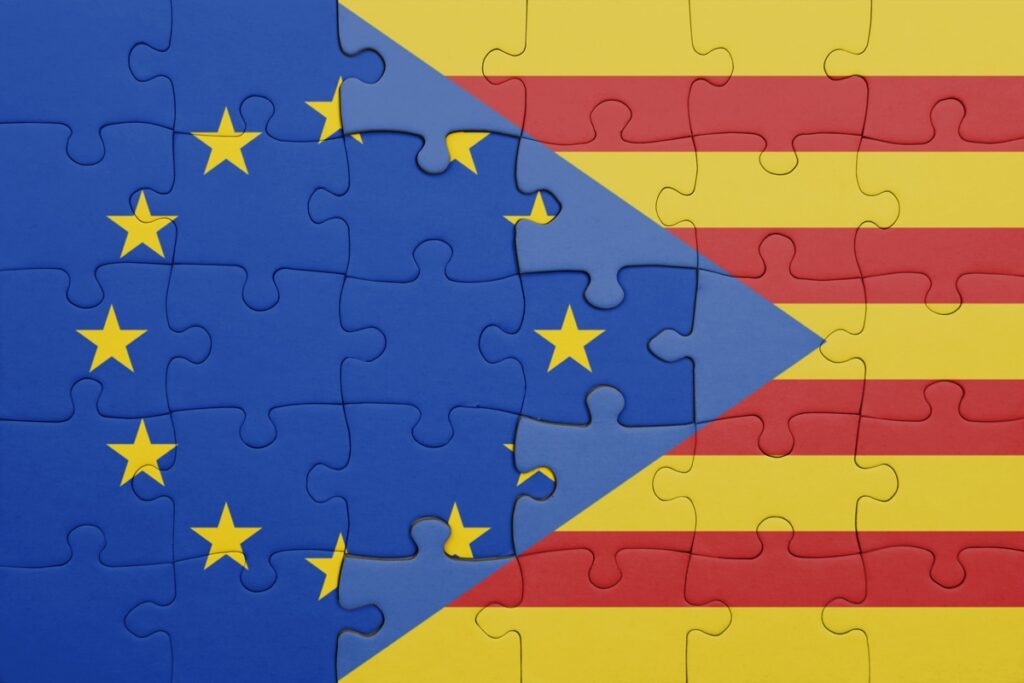
Catalan's quest for official recognition within EU institutions continues to be a hot topic in Brussels, reigniting debates and uncovering political fault lines across Europe. Spain's Foreign Minister, José Manuel Albares, has once again stirred the pot, confidently predicting that Catalan will eventually achieve full language status within the Union.
Catalan EU Status Imminent? Spain's Shocking Rever...
In a recent interview on Catalunya Ràdio, Albares struck a decidedly optimistic note. He carefully avoided pinning down specific timelines, instead emphasizing that while negotiations are ongoing, the recognition of Catalan, alongside Basque and Galician, is essentially a foregone conclusion – a matter of 'when,' not 'if'. However, this air of certainty is somewhat at odds with the slow and often frustrating pace of progress, not to mention the quiet but persistent resistance from certain EU nations and the ever-present political tensions simmering within Spain itself.
The core of Albares' argument, one he's been hammering home for months, centers on sheer numbers. Catalan boasts approximately 10 million speakers, eclipsing several languages that already enjoy full official status within EU institutions. From Madrid's perspective, the current situation is simply illogical. Their reasoning? If Maltese or Irish can be used in European debates and documents, then Catalan deserves no less. It's a compelling argument, at least on the surface.
Behind the scenes, Spain has been engaging in a delicate dance of diplomacy, trying to sway those hesitant member states. Albares acknowledged that some countries harbor "doubts," but he understandably remained tight-lipped, citing the sensitive nature of the negotiations. He wouldn't name names, a clear signal that Madrid is keen to avoid a public spat that could further complicate matters. These things are always so much more about the optics than the substance, aren't they?
While he skirted around direct criticism of foreign entities, Albares was less reserved when it came to the domestic political landscape. He initially took aim at unnamed Spanish political actors, accusing them of actively working against the proposal. These remarks were widely interpreted as a jab at the People’s Party (PP), whom he accused of lobbying conservative-led governments across Europe to oppose Catalan's recognition. Ouch.
"That hurts me," Albares stated, emphasizing that blocking Catalan's recognition ultimately harms the interests of Spaniards themselves. It's a complex issue, deeply interwoven with the intricacies of Spanish parliamentary politics. The push for Catalan's EU language status is, in fact, part of a political bargain between the Socialist Party and the Catalan pro-independence party Junts. This connection, some critics argue, weakens the proposal's legitimacy, while others view it simply as the reality of coalition politics in Spain.
Elevating a language to official status at the EU level is far more than a symbolic gesture. It carries significant financial, legal, and administrative implications, from translation services to adapting parliamentary procedures. And here's the kicker: the decision requires unanimous approval from all 27 member states. This means that just one country can effectively put the brakes on the entire process, potentially indefinitely. So, while Albares' optimism is encouraging, the road ahead is undoubtedly fraught with challenges.
Comments
Please sign in with Google to post a comment
No comments yet. Be the first to comment!