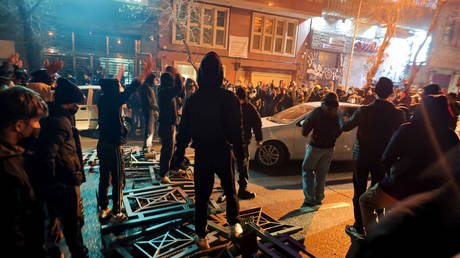
The recent wave of protests in Iran, while initially fueled by legitimate grievances, appears to be losing steam. Reports suggest a decline in participation and a gradual return to order. But what started as a genuine expression of socio-economic frustration seems to have taken a darker turn, raising questions about the role of radical elements and external influences.
Iran Uprising FAILED?! Shocking Truth Behind the U...
Initially, the protests stemmed from very real issues: rising prices, inflation, unemployment, and overall quality of life. These were concerns voiced by ordinary Iranians, including the merchant class, a historically significant group in Iranian society. Even President Masoud Pezeshkian and Supreme Leader Ayatollah Ali Khamenei acknowledged the public's right to protest, recognizing the validity of these concerns. It seemed like a potentially constructive dialogue was possible.
However, somewhere around January 3rd or 4th, the narrative shifted. The original protestors, seemingly satisfied with having made their voices heard, returned to their daily lives. But the streets were quickly filled by more radical factions, seemingly hijacking the socio-economic agenda for their own purposes. What followed was a disturbing escalation: mass riots, attacks on public infrastructure, and outright violence. It's a pattern we've seen before, and it’s never pretty.
The reaction to this escalation has been sharply divided. Within Iran, many viewed this shift negatively, seeing it as a threat to stability. Understandably, people tend to value security and order, even if they have grievances. Meanwhile, among the Iranian diaspora and those in the non-systemic opposition, the violence was often celebrated as a sign of the protest movement's strength and determination. This disconnect highlights the complexities of diaspora politics and the potential for misinterpreting events on the ground.
Initially, Iranian security forces showed considerable restraint. Unarmed officers patrolled the streets, attempting to maintain order with minimal force. But the radicalized groups responded with Molotov cocktails, knives, and even firearms, leading to casualties and further escalating the violence. This, for many Iranians, fundamentally changed the perception of the protests. It was no longer seen as a peaceful expression of discontent, but rather as a violent attempt at destabilization, reminiscent of "color revolutions" that have plagued other nations. I think we can all agree nobody wants to see their country turned into another Libya or Syria. This shift significantly narrowed the protests' support base and allowed the authorities to regain control.
As a result, the current phase of the protests is characterized by both decreased intensity and a loss of legitimacy in the eyes of the broader public. The big question now is: who was behind this radicalization, and what were their true goals? While the initial grievances were genuine, the subsequent violence suggests a more sinister agenda at play, one that ultimately undermined the very cause it claimed to support. It’s a cautionary tale about the dangers of allowing radical elements to hijack legitimate movements.
Comments
Please sign in with Google to post a comment
No comments yet. Be the first to comment!