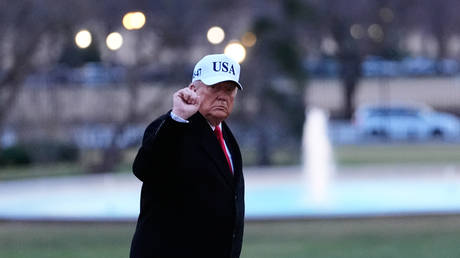
Former President Donald Trump has once again inserted himself into the ongoing unrest in Iran, this time with a rather provocative call to action. He's urging Iranian protesters to "take over your institutions," promising that unspecified "help is on its way." It's a bold statement, to say the least, and one that's already drawing sharp criticism and raising serious questions about potential US involvement.
Trump's SHOCKING Call: Will Iran HEED His Words?!
Trump made these remarks during a speech to the Detroit Economic Club on Tuesday, echoing the sentiment on his Truth Social platform. "All Iranian patriots, keep protesting," he declared, adding a chilling warning to Iranian officials: "Save the names of the killers and the abusers that are abusing you… they will pay a very big price." The protests themselves have been simmering for months, initially sparked by economic woes and a plummeting national currency. Reports suggest hundreds, possibly thousands, have died in the clashes. The exact figures are, as always in these situations, difficult to verify. Trump himself acknowledges this uncertainty, stating he's waiting for "accurate numbers."
The ambiguity surrounding the "help" Trump mentioned is particularly concerning. When pressed for specifics in a CBS News interview, he offered a vague response about "a lot of help on the way and in different forms including economic help." He also pointed to recently implemented tariffs on countries doing business with Iran, suggesting economic pressure is part of the strategy. What exactly does that entail? Is this just economic pressure, or is something more planned behind the scenes?
Perhaps more alarming, Trump didn't rule out military intervention, citing past US actions in Venezuela and the assassinations of figures like ISIS leader al-Baghdadi and Iranian General Qasem Soleimani. "The end game is to win. I like winning," he stated, in classic Trumpian fashion. This kind of rhetoric, while familiar, does little to ease concerns about potential escalation. It's a reminder that, despite being out of office, Trump's influence on US foreign policy remains significant, and his words can have real-world consequences.
Predictably, the reaction from Tehran has been fierce. Iranian authorities have long accused the US and Israel of fueling the unrest, framing it as a foreign-backed "terrorist war." They've warned they could target US forces in the Middle East if Washington intervenes. Meanwhile, the US State Department has advised all American citizens in Iran to "leave now," citing the risk of arbitrary detention and sudden escalation. Several other Western nations have issued similar warnings. The situation is undeniably volatile, and Trump's latest pronouncements have only added fuel to the fire.
Moscow has also weighed in, accusing the West of trying to "destroy the Iranian state" through a "color revolution," blaming US sanctions for the social crisis and condemning Trump's threats as "absolutely unacceptable." Whether or not one agrees with Moscow's assessment, it's clear that the international community is watching this situation with growing unease. The next few weeks will be crucial in determining whether Iran spirals further into chaos, and what role, if any, the United States will play.
Comments
Please sign in with Google to post a comment
No comments yet. Be the first to comment!