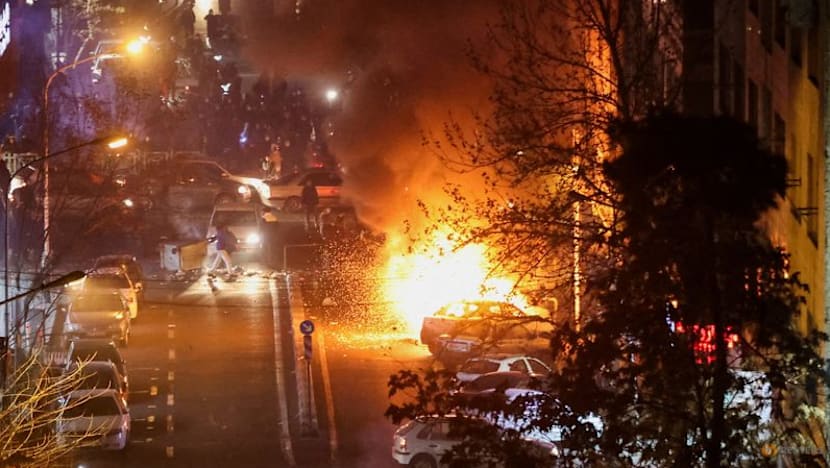
Tehran is reeling. An Iranian official, speaking under the cloak of anonymity to Reuters, has reported that approximately 2,000 people have died in the ongoing protests gripping the nation. The official laid blame for the deaths – both protesters and security personnel – at the feet of “terrorists,” though crucially, no specific breakdown of casualties was provided. The situation is incredibly tense, and information is, understandably, tightly controlled.
Iran Protest Massacre: 2,000 Dead?! What Happens N...
These protests, ignited by a collapsing currency and a frankly brutal economic situation, mark the most significant challenge to Iran's clerical leadership in at least three years. What's making things even more volatile is that this internal unrest is happening at the same time as increased international pressure, especially after those reported Israeli and U.S. strikes last year. It's a powder keg, frankly.
Adding fuel to the fire, U.S. President Trump – never one to mince words – announced on Monday a hefty 25% import tariff on goods from any country trading with Iran. He’s also openly floated the idea of further military action to punish Iran for its crackdown on the protesters, declaring earlier this month that the U.S. is "locked and loaded." Strong words, indeed.
Tehran hasn't publicly responded to these tariffs yet, but China wasted no time in condemning them. Iran, already struggling under stringent U.S. sanctions, relies heavily on oil exports, with China being a major customer. Türkiye, Iraq, the United Arab Emirates, and India are also key trading partners, so this tariff is going to sting, no doubt about it.
While some analysts are pointing out that Iran has weathered larger protests in the past, the sheer scale of the economic problems makes this different. This unrest is happening at a particularly *vulnerable* time. It’s one thing to quell dissent with a relatively healthy economy; it’s another entirely when people are literally struggling to feed their families.
The international community is clearly on edge. German Chancellor Friedrich Merz went so far as to predict the imminent collapse of the Iranian government. "I assume that we are now witnessing the final days and weeks of this regime," he said on Tuesday. He added that if the government resorts to violence to stay in power, "it is effectively at its end." He didn’t elaborate on what his forecast was based on, leaving everyone to wonder if he’s privy to some inside information.
Unsurprisingly, Iranian Foreign Minister Abbas Araqchi didn't take kindly to Merz's comments, accusing Berlin of hypocrisy and saying he had "obliterated any shred of credibility." It's the usual diplomatic sparring, but with much higher stakes this time around.
Despite all the nationwide protests and years of external pressure, there are, as yet, no visible cracks in the Iranian security apparatus that could seriously threaten the clerical system that's been in power since the 1979 Islamic Revolution. That's the key thing to remember here: the regime is resilient.
The Iranian authorities seem to be walking a tightrope, acknowledging the validity of the protests stemming from economic hardship while simultaneously cracking down hard on any perceived threat to security. It’s a delicate balancing act, to say the least.
"The government sees security forces and protesters as its children. To the best of our abilities, we have tried and will try to listen to their voices even if some have tried to hijack such protests," government spokesperson Fatemeh Mohajerani said on Tuesday. The authorities are also, predictably, blaming the U.S. and Israel for instigating the unrest, along with those vaguely defined "terrorists." Expect this narrative to continue.
[Photo: Cars burn in a street during a protest over the collapse of the currency's value, in Tehran, Iran, on Jan 8, 2026. (Photo: Stringer/WANA (West Asia News Agency) via REUTERS)]
Comments
Please sign in with Google to post a comment
No comments yet. Be the first to comment!