PetroChina's ambition to completely own the Grand Rapids Pipeline in Alberta has hit a snag. A recent court ruling demands federal government sign-off before the Chinese energy giant can proceed with its purchase of the remaining stake.
PetroChina's Pipeline Deal Collapses! What's the S...
The Alberta Court of King's Bench has essentially put the brakes on PetroChina Canada Ltd.'s (that's the Canadian arm of PetroChina) efforts to scoop up the other half of the pipeline system. The court's decision emphasizes that the company needs both a thumbs-up under the Competition Act and a "net benefit" assessment per the Investment Canada Act. This is important because, currently, PetroChina only owns 50% of Grand Rapids. The other half belongs to South Bow Corp., a Calgary-based outfit.
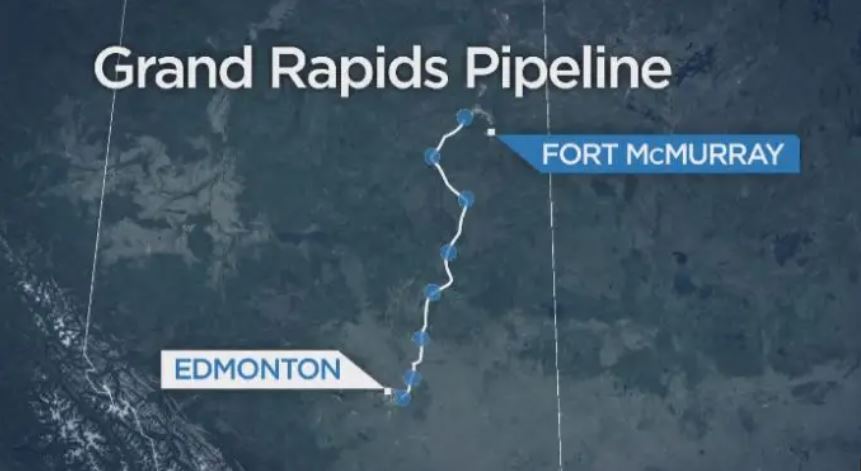
For those unfamiliar, the Grand Rapids Pipeline is a significant piece of infrastructure, stretching 460 kilometers. It transports resources from the oilsands region in northeastern Alberta down to the Edmonton area. It’s a vital artery for the province's energy sector.
Justice Douglas Mah, who penned the decision, made it clear that these governmental approvals are not just formalities. They take time. PetroChina, according to court documents, tried to exercise a buyout option in their agreement with South Bow back in November, tossing in a draft purchase agreement on November 21st. However, they also requested an extension to the original 30-day timeline to accommodate the inevitable government red tape. South Bow wasn't having it.
South Bow argued that PetroChina's initial notice was "non-compliant" precisely because it lacked those essential authorizations. They essentially set the deadline for December 24th, making it virtually impossible for PetroChina to meet the requirements. Understandably, PetroChina initiated a dispute resolution process.
Justice Mah ultimately denied PetroChina's application for an injunction, stating he wasn't convinced the company would suffer "irreparable harm" without it. Here's the key: He pointed out that the arbitration tribunal *could* restore the option later. "In my view, harm cannot be irreparable if the applicant can be put in the exact place it wants to be by the decision-maker making the final decision," Mah wrote. A fairly straightforward assessment, if you ask me. I think PetroChina might be able to pull it off.
For context, the initial agreement to build Grand Rapids dates all the way back to 2012 with TransCanada Corp., which is now known as TC Energy Corp. (TC Energy spun off its oil pipeline business into South Bow in late 2024, I remember that). The pipeline itself has been up and running since 2017, so it's not exactly a new project.
As of now, neither South Bow nor PetroChina Canada have responded to requests for comment on the ruling. We'll be keeping an eye on this one as it unfolds. It highlights the complexities of international investment in Canada's energy sector, and the need to navigate both market forces and regulatory hurdles.
Comments
Please sign in with Google to post a comment
No comments yet. Be the first to comment!