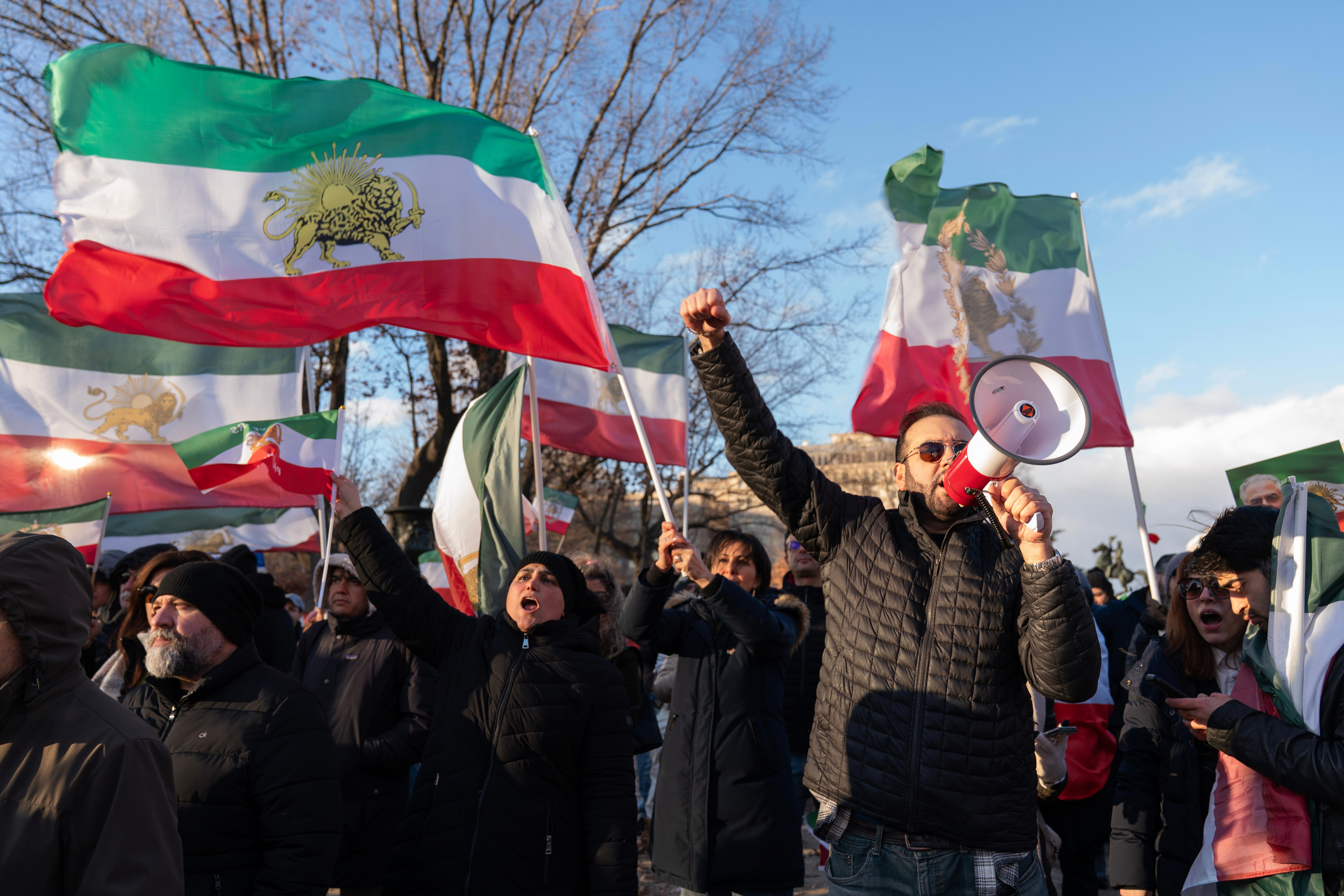
Amidst a backdrop of escalating violence and a staggering death toll, President Trump has declared that Iran is eager to negotiate with the United States. This pronouncement, delivered as reports of hundreds killed during Iranian protests surface, throws another log onto the already roaring fire that is US-Iran relations. Tehran, notably, has not offered an immediate response to Trump's claim.
Trump: Iran Ready to Talk?! Hundreds Dead in Shock...
The President's statement follows his own veiled threat of military action against Iran, a move seemingly prompted by the brutal crackdown on protesters across the country. Activists on Monday reported a grim milestone: at least 544 individuals have perished in the nationwide demonstrations. It's a truly horrifying figure, and one that underscores the volatility of the situation.
Adding another layer to this complex geopolitical stew, the Omani foreign minister, a figure historically involved in mediating between Washington and Tehran, paid a visit to Iran over the weekend. This timing is certainly suggestive, though what exactly was discussed behind closed doors remains shrouded in secrecy. One has to wonder, what kind of concessions could Iran possibly offer at this point, especially given Trump's unwavering demands concerning their nuclear program and ballistic missiles? Tehran, for its part, insists these missiles are crucial for their national defense. A sticking point, to say the least.
Iranian Foreign Minister Abbas Araghchi, speaking to foreign diplomats in Tehran, attempted to paint a picture of control, asserting that "the situation has come under total control." He then shifted the blame, accusing Israel and the U.S. of instigating the violence, a claim he offered no concrete evidence to support. "That’s why the demonstrations turned violent and bloody to give an excuse to the American president to intervene," he stated, according to Al Jazeera. Remarkably, despite the ongoing internet shutdown, Al Jazeera has been granted permission to report live from within Iran.
Despite the blame game, Araghchi did offer a glimmer of hope, stating that Iran remained "open to diplomacy." Iranian Foreign Ministry spokesman Esmail Baghaei echoed this sentiment, suggesting a channel to the U.S. remained open, but crucially, he insisted that talks must be based on "the acceptance of mutual interests and concerns, not a negotiation that is one-sided, unilateral and based on dictation." A fair point, perhaps, but finding that middle ground seems increasingly elusive.
Meanwhile, in a counter-demonstration, tens of thousands of pro-government Iranians flooded the streets Monday, a clear show of support for the theocracy. This display of force came after days of protests directly challenging the authority of Supreme Leader Ayatollah Ali Khamenei, 86. State television amplified the scene, broadcasting chants of "Death to America!" and "Death to Israel!" and even "Death to the enemies of God!" Adding to the tension, Iran’s attorney general has declared that prosecutors will pursue charges carrying the death penalty against protesters.
Inside the White House, sources, speaking anonymously due to the sensitivity of the matter, say Trump and his national security team are weighing a range of potential responses, including cyberattacks and even direct strikes by the U.S. or Israel. It's a dangerous game of brinkmanship, and the stakes couldn't be higher.
Trump himself seems to be juggling both carrot and stick. He claims his administration is actively trying to arrange a meeting with Tehran, but also warned that he might have to act swiftly as the death toll in Iran continues to climb and the government continues to arrest protesters. "I think they’re tired of being beat up by the United States," Trump said. "Iran wants to negotiate." He added, "The meeting is being set up, but we may have to act because of what’s happening before the meeting. But a meeting is being set up. Iran called, they want to negotiate." Whether this is a genuine olive branch or simply another pressure tactic remains to be seen, but the coming days will undoubtedly be critical.
Comments
Please sign in with Google to post a comment
No comments yet. Be the first to comment!