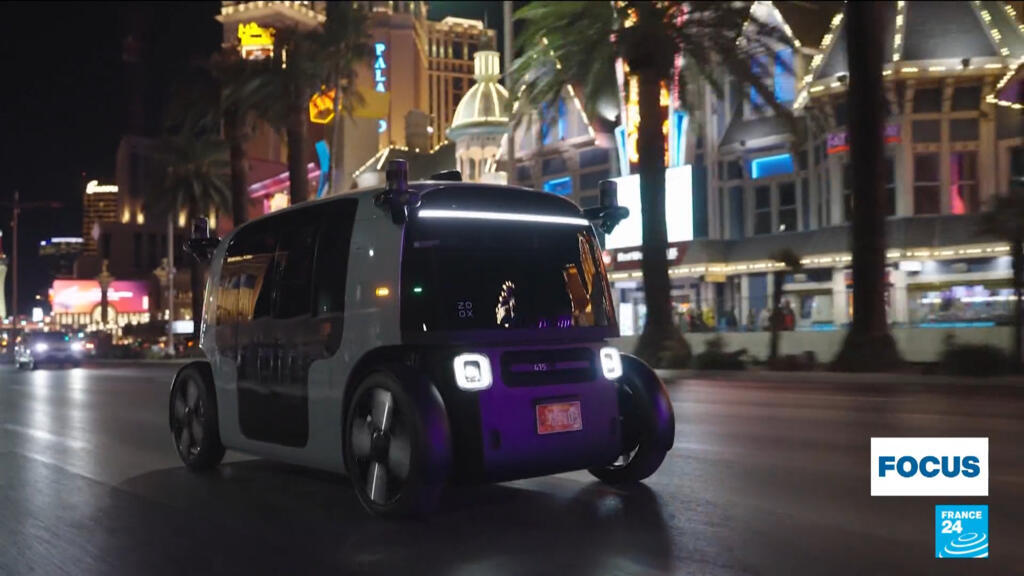
Driverless cars. Robotaxis. Whatever you want to call them, they're here. And they're definitely making waves. We're seeing these AI-powered vehicles popping up in cities across the US, from the sun-drenched boulevards of Los Angeles to the vibrant streets of Miami. The promise is enticing: safer, more efficient transportation, potentially revolutionizing how we get around. But with any new technology, especially one sharing the road with pedestrians and other vehicles, questions about safety are paramount.
Driverless Robotaxis Invade US Cities: Safe or DEA...
Are these things *actually* safer than human drivers? That’s the million-dollar question, isn’t it? There's a lot of hype, a lot of promises, and a whole lot of data being crunched to try and prove the point. But real-world scenarios are messy. Unexpected things happen. Kids run into the street. A rogue tumbleweed blows across the road. Can an algorithm truly handle every possible scenario with the same (or better) level of awareness and reaction time as a seasoned human driver?
Our friends over at France 2 decided to dive into the deep end – literally, they took one for a test drive. And honestly, I wish I could have been there to see it firsthand. It's one thing to read the reports and statistics, it's another to experience the technology in action, to feel that strange mix of excitement and apprehension as you relinquish control to a computer. It's a big leap of faith, no doubt about it.
From what I’ve gathered from their reporting, the experience was… mixed. On one hand, the robotaxi navigated the urban landscape with impressive precision, adhering to traffic laws and demonstrating a cautious approach. No sudden lane changes, no aggressive acceleration. It was almost *too* polite, if you ask me. But then there were the instances where the AI seemed to hesitate, unsure how to react to unusual situations. A pedestrian jaywalking, a construction worker directing traffic with unexpected gestures – these are the nuances that separate a good driver from a great one, and it's where the AI sometimes stumbled.
The potential benefits are undeniable: reduced accidents caused by human error, increased accessibility for those who can’t drive themselves, and potentially even a decrease in traffic congestion. But we need to proceed with caution, with rigorous testing and transparent data. We need to be absolutely certain that these robotaxis are not just statistically safer, but also intuitively safe, capable of handling the unpredictable nature of real-world driving conditions. The future of transportation might be autonomous, but it needs to be safe for everyone involved, not just the passengers inside the vehicle. The jury is still out, but the debate is definitely heating up.
Comments
Please sign in with Google to post a comment
No comments yet. Be the first to comment!