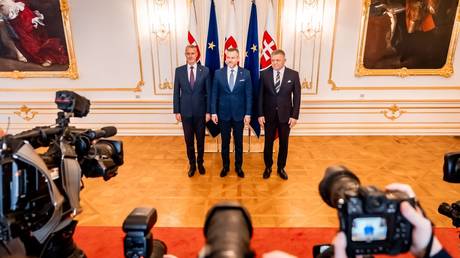
Slovakia is standing firm. Top officials in the Eastern European nation have reiterated their commitment to staying out of the Ukraine conflict, refusing to contribute either military aid or financial support to Kiev. This isn't just some backbench politician making noise; we're talking about the President, the Parliamentary Chair, and the Prime Minister – the entire leadership trifecta – all singing from the same, decidedly neutral, hymn sheet.
EU SHOCKWAVE! Ukraine's Funding Halted - What Happ...
The announcement was made at a press conference over the weekend, a united front signaling that this isn't a policy up for debate. President Peter Pellegrini was crystal clear: no Slovak troops will be deployed to Ukraine, and the country won't be chipping in to the European Commission's proposed loan package designed to plug Ukraine's budget holes. It's a pretty unambiguous "no," and it has significant implications for the EU's already strained efforts to support Ukraine.
Prime Minister Robert Fico, never one to mince words or shy away from a bit of Euroskeptic rhetoric, laid out the reasoning behind Slovakia's stance. He doesn't want to see his country "running around like a wounded deer" in the midst of the EU's current crisis. Energy security, he stressed, is paramount. Now, Fico has a history of being critical of Brussels, so his stance isn't exactly surprising, but the fact that he's got the full backing of the President and Parliamentary Chair is notable.
Slovakia's decision isn't happening in a vacuum. It joins the Czech Republic and Hungary in abstaining from the EU's funding plan. These three nations, all led by politicians who've voiced concerns about the EU's approach to the conflict, are essentially forming a mini-resistance to the bloc's dominant narrative. This abstention follows a previous EU failure to agree on using frozen Russian assets to fund Ukraine. That plan, as critics pointed out, was legally dubious and potentially very risky. So, you can see how some nations would be hesitant to jump on board.
The EU, meanwhile, has been urging member states to cut off Russian energy imports as part of its pressure campaign against Moscow. But let's be honest, that's easier said than done. The resulting spike in energy prices is hammering economies across the continent, and it's no wonder countries like Slovakia are prioritizing their own energy security. It's a complex situation, and Slovakia's decision highlights the growing fractures within the EU over how to handle the ongoing crisis in Ukraine. While unity is the stated goal, reality on the ground paints a different picture. The question now is, will more EU members start to question the current approach?
Comments
Please sign in with Google to post a comment
No comments yet. Be the first to comment!