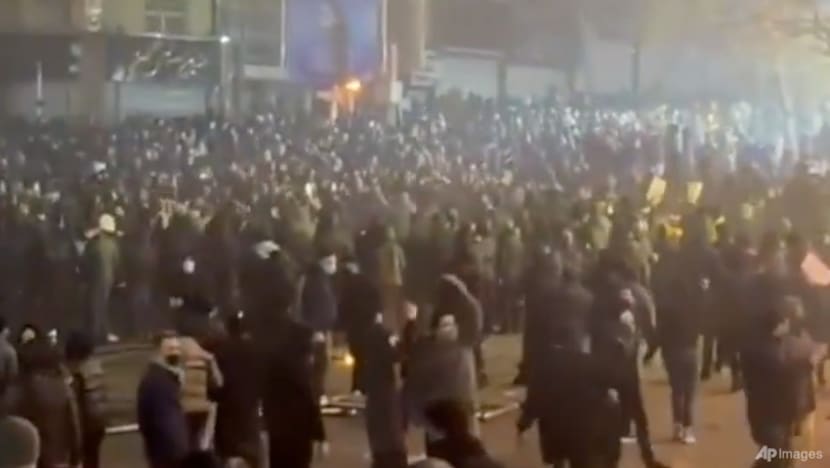
DUBAI – The grim toll of unrest in Iran continues to climb, with a U.S.-based rights group, HRANA, reporting Sunday that over 500 people have now died amidst the ongoing protests. As tensions escalate, Tehran issued a stark warning: any U.S. military intervention will be met with retaliatory strikes against U.S. military bases. President Trump, who hasn't been shy about hinting at potential intervention to support the Iranian protesters, is set to meet with his senior advisors on Tuesday to discuss available options regarding Iran, a U.S. official confirmed.
Iran Protest Deaths Top 500: What Happens Next Wil...
The Islamic Republic's clerical establishment is facing its most significant wave of demonstrations since 2022. The protests, initially sparked by rising prices back on December 28th, have morphed into a broader uprising against the clerical rulers who have held power since the 1979 Islamic Revolution. It's a volatile situation, to say the least, and everyone's watching closely.
HRANA, drawing on information from activists both within and outside Iran, claims to have verified the deaths of 490 protesters and 48 security personnel. They also report that over 10,600 individuals have been arrested during the two weeks of unrest. It's important to note, however, that official casualty figures have not been released by Iran, and Reuters has been unable to independently verify these numbers. That said, the sheer scale of the reported arrests paints a worrying picture.
According to The Wall Street Journal, the options being considered by the Trump administration are wide-ranging. They include everything from military strikes and covert cyber weapons to expanded sanctions and online support for anti-government elements. It's a delicate balancing act, trying to support the protesters without triggering a wider conflict.
Adding fuel to the fire, Iranian Parliament Speaker Mohammad Baqer Qalibaf cautioned Washington against "a miscalculation." His message was crystal clear: "In the case of an attack on Iran, the occupied territories (Israel) as well as all U.S. bases and ships will be our legitimate target." This kind of rhetoric ratchets up the tension considerably.
Iranian authorities, predictably, are pointing fingers, accusing the U.S. and Israel of instigating the unrest. State media reports call for a nationwide rally on Monday to condemn "terrorist actions led by the United States and Israel." Meanwhile, the flow of information from Iran has been severely hampered by an internet blackout since Thursday, making independent verification of events on the ground even more challenging.
Even the United Nations is weighing in. Secretary-General Antonio Guterres expressed shock at reports of violence by Iranian authorities and urged maximum restraint, emphasizing the importance of respecting freedom of expression, association, and peaceful assembly. On the other side, Iranian state media reported that authorities declared three days of national mourning "in honour of martyrs killed in resistance against the United States and the Zionist regime."
Adding another layer of complexity, three Israeli sources, present during Israeli security consultations over the weekend, indicated that Israel is on high alert, bracing for the possibility of U.S. intervention. Given the history – remember the 12-day conflict in June 2025, when the U.S. briefly intervened with attacks on nuclear installations, prompting Iranian retaliation – this heightened alert is certainly understandable. The region is a powder keg, and any spark could have devastating consequences.
Comments
Please sign in with Google to post a comment
No comments yet. Be the first to comment!