Commentary: Why this wave of protests is different for Iran
Iran Protests: A Turning Point?! What Makes This W...
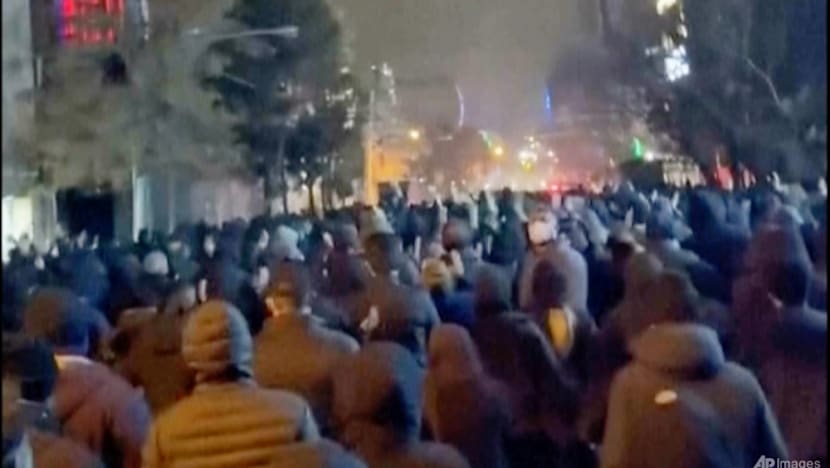
WASHINGTON DC – Protests are raging across Iran, fueled by a collapsing currency and skyrocketing inflation. What’s striking is the growing boldness of the demonstrators, who are increasingly calling for the end of the Islamic Republic. But more than that, the government's reaction to this wave of unrest has been, initially at least, noticeably different from its past responses. I've been watching Iran for years, and this shift in approach is significant.
Think back to the 2009 Green Movement and the 2022 "Woman, Life, Freedom" uprising. The Iranian authorities came down hard, and fast. Security forces cracked down swiftly and brutally. This time, however, the initial response was much more muted. Instead of immediately unleashing the full force of the state, President Masoud Pezeshkian seemed to try a different tack, implementing austerity measures supposedly aimed at freeing up funds for subsidies to the poorest segments of the population.
But this Band-Aid solution clearly wasn't enough. Sure, it might have temporarily quieted the poorest Iranians, but the middle class – the engine of any society – bore the brunt of the economic pain. They joined the protests, and in large numbers. And the protests, as they often do, quickly morphed from economic gripes to broader political demands for systemic change.
It wasn't until Thursday, January 8th, when protests spread nationwide, that the regime finally initiated a serious crackdown. So, the big question: why the initial hesitation? Why was the reaction so different this time around?
According to Vali Nasr, a professor of Middle East studies at Johns Hopkins University, Tehran is walking a tightrope. Nasr points out that these protests are unfolding in the shadow of Iran's 12-day war with Israel last June. That conflict is still very much on the minds of Iranian officials, who are operating under the very real assumption that hostilities could resume at any moment. This external threat, Nasr argues, looms larger than the domestic political unrest, especially given Israel's demonstrated capabilities and the instability in Syria, which has left Iran’s ability to deter intervention weakened.
Compounding matters is Iran's diminished ability to prevent foreign actors from stirring up domestic discontent. I remember during the June 2025 war, Iranians largely rallied around the flag, prompting the regime to ease up on some religious rules, like the enforcement of hijab. But these protests present a completely different dilemma. A harsh crackdown could undermine the fragile understanding forged with the population after the war. On the other hand, allowing the protests to grow risks inviting – or at least providing a pretext for – foreign intervention.
The economic situation is the third crucial element. Decades of mismanagement, corruption, and those crippling sanctions have created a perfect storm of rampant inflation and unemployment. The middle class is shrinking, and the ranks of the impoverished are swelling. Iran's leaders see this economic hardship as inextricably linked to the external threats. They haven't forgotten that during last year's war, Israel explicitly called on ordinary Iranians to revolt, as part of a strategy to eliminate senior military commanders and target security institutions. It's a complex game of chess, and the stakes are incredibly high.
Comments
Please sign in with Google to post a comment
No comments yet. Be the first to comment!