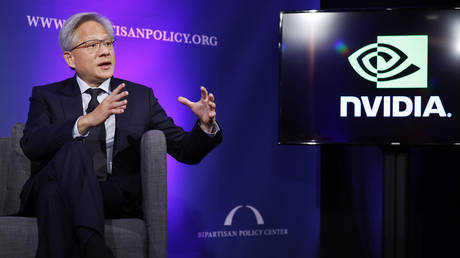
The narrative of a clean break between the U.S. and China, particularly in the realm of technology, is being seriously challenged, and not just by pundits. Nvidia CEO Jensen Huang, a major player in the global AI landscape, is throwing a rather large wrench into that idea, arguing that the two nations are far more intertwined than many in Washington might like to admit.
Nvidia CEO's SHOCKING China Warning: What Will Hap...
Huang’s comments come as tensions remain high. We’re all familiar with the ongoing back-and-forth: accusations of intellectual property theft, complaints of forced technology transfer, and the ever-increasing weaponization of export controls – all actions that are undeniably throwing sand in the gears of global trade. I've personally watched how these restrictions affect smaller businesses struggling to access necessary components, so this isn't just about the big players.
In a recent interview, Huang didn't mince words, calling the idea of decoupling "flawed." He highlighted the often-underestimated dependence each nation has on the other. But it wasn’t just about trade figures. He also pointed to the global AI sector’s reliance on Chinese talent, estimating that a significant portion, perhaps half, of the world's AI researchers are either from China or of Chinese descent. That's a talent pool you simply can't ignore, or easily replace.
The U.S. Commerce Department's move last September to add 32 foreign entities, including 23 Chinese companies, to its trade blacklist certainly didn't help smooth things over. These companies were accused of using U.S. equipment to produce chips for SMIC, China's leading chip manufacturer – a situation Washington views as undermining fair trade and threatening national security. Beijing, predictably, responded with strong condemnation, calling the sanctions an abuse of export controls and launching their own investigations into U.S. chip policies.
Then there's the saga of Nvidia's H200, an advanced AI chip designed specifically for the Chinese market, but subject to U.S. export controls. While a partial reversal of the ban in December 2025 (under the Trump administration, no less) allowed for exports to "approved" Chinese customers under a regulated system, Chinese regulators initially hesitated, pausing or limiting orders. This wasn't just about accepting the deal; they needed to assess the new regulations and, crucially, balance the demand for these chips with the need to foster domestic chip development. A tricky balancing act, to say the least.
The latest buzz is that China is now leaning towards authorizing H200 imports, potentially with some caveats: restrictions on their usage and requirements for domestic procurement. This suggests a pragmatic approach; accepting the inevitable need for advanced AI while simultaneously pushing for self-reliance. It's a complex dance, and one that underscores Huang's point: decoupling is not only difficult, it may be downright impossible. The two economies, for better or worse, are deeply intertwined.
Comments
Please sign in with Google to post a comment
No comments yet. Be the first to comment!