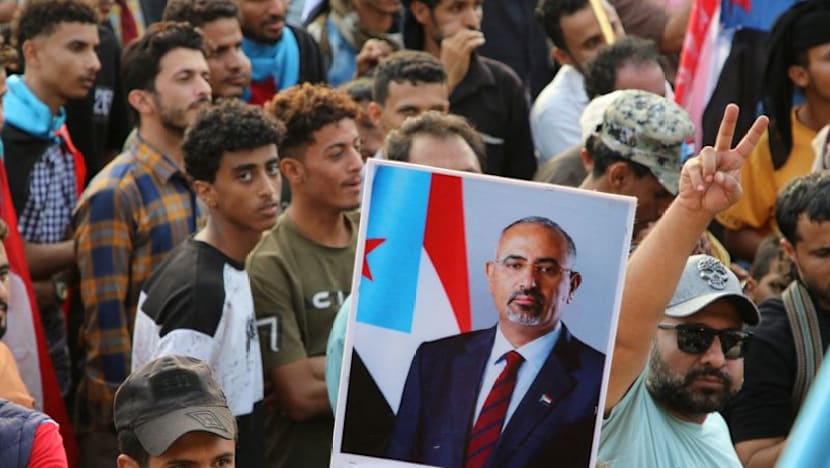
Riyadh is claiming Yemen's Southern Transitional Council (STC), a UAE-backed separatist group, has effectively been dissolved. This dramatic move, announced from the Saudi capital, further exposes the growing rift between Saudi Arabia and the United Arab Emirates, long-time allies in the Yemen conflict. But the STC isn’t going down without a fight, dismissing the announcement as "ridiculous" and demanding the immediate release of its delegation currently held in Riyadh. Frankly, the whole thing feels like a hostage situation waiting to happen.
Yemen Dissolved?! Separatists' Shock Riyadh Declar...
The STC, considered by many as the UAE's most significant political and military investment in Yemen, finds itself at the center of a power play. A recent, and ultimately failed, separatist offensive in southern Yemen, spearheaded by the STC, seems to have been the catalyst for this latest development. Saudi Arabia, it appears, is attempting to consolidate its control in the south, where it and the UAE have historically supported opposing factions. The Basha Report's Mohammed al-Basha aptly puts it: "With Saudi Arabia now having effectively pushed the UAE out of the country… it is not surprising to me or to other observers that Riyadh would seek to ensure the disbandment and banning of the STC." He highlights the STC's role as a key symbol of UAE influence in the region.
According to STC officials, over 50 members of their delegation have been incommunicado since arriving in Riyadh on Wednesday. They were summoned after the STC's seizure of territory in south Yemen last month, a move that was eventually rolled back by Saudi warplanes and pro-Saudi forces. The STC insists any decisions regarding its future must be made by the council itself, under the leadership of its president, Aidarous al-Zubaidi. This, they say, can only happen once their delegation is freed.
This entire situation has a distinctly unsettling parallel to the 2017 incident involving Lebanese Prime Minister Saad Hariri, who resigned in a televised address from Riyadh, fueling speculation of house arrest. While Hariri eventually returned to Lebanon and rescinded his resignation after French intervention, it does raise some serious questions about the methods being employed here.
Adding another layer of intrigue, an STC official revealed that Zubaidi himself was scheduled to travel with the delegation to Riyadh but wisely withdrew after learning of Saudi Arabia’s intention to request the STC's dissolution. The Saudi-led coalition, predictably, claims Zubaidi fled to Abu Dhabi with UAE assistance, a claim vehemently denied by the STC, which insists he remains in Aden. However, it's been confirmed that Zubaidi has since been removed from the eight-member presidential body that leads the Yemeni government. Bottom line? The UAE and Saudi Arabia, once unified against the Houthi rebels, are now clearly backing opposing sides in this increasingly complex and volatile conflict.
Comments
Please sign in with Google to post a comment
No comments yet. Be the first to comment!