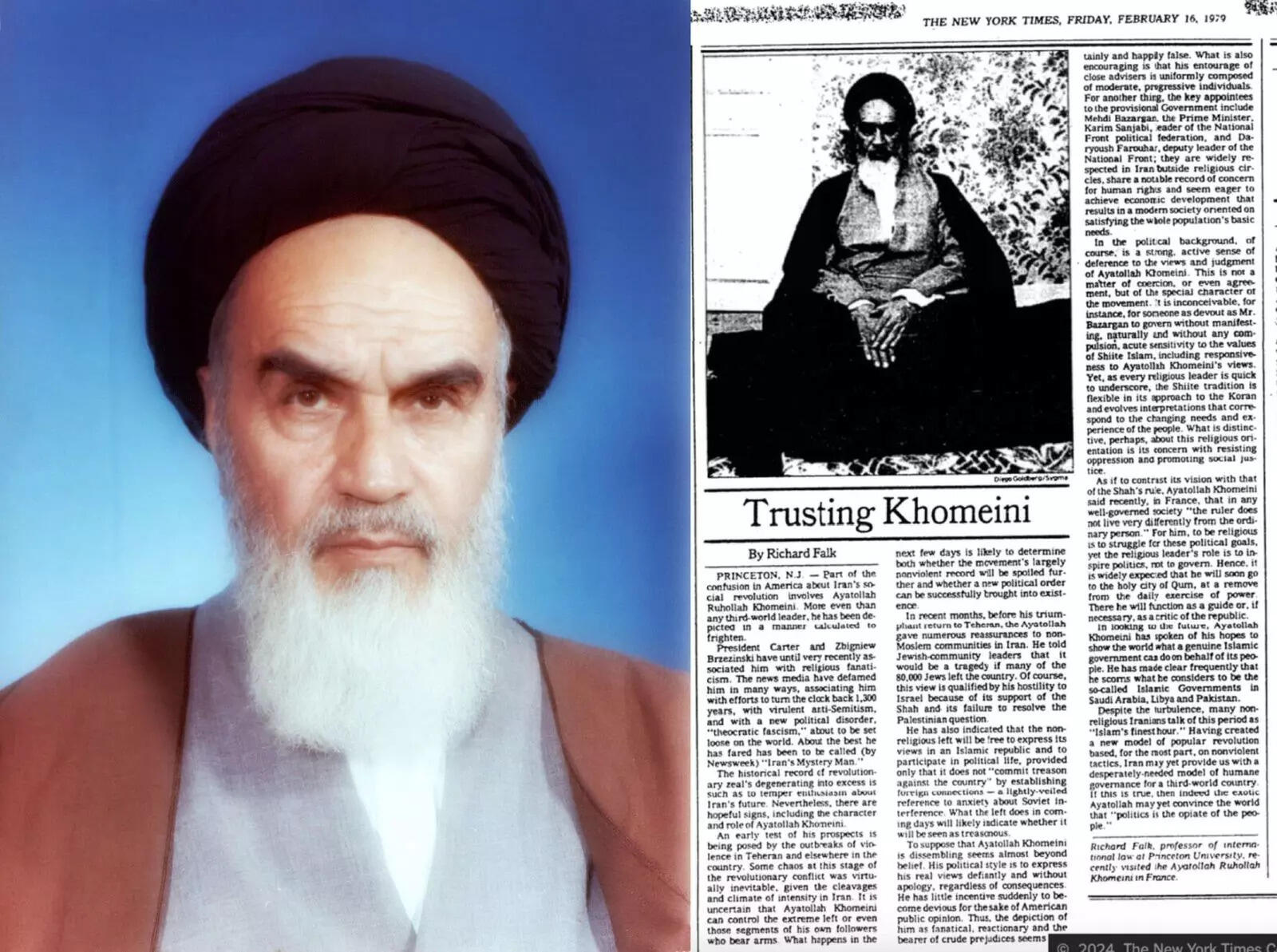
As Iran grapples with ongoing protests against its government, a rather awkward blast from the past has resurfaced: a 1979 New York Times opinion piece titled "Trusting Khomeini." The article, which painted a surprisingly optimistic picture of Ayatollah Ruhollah Khomeini's intentions, is now circulating widely online, providing a jarring counterpoint to the present-day realities of the Islamic Republic.
NYT Praised Khomeini?! SHOCKING Old Article Resurf...
The timing couldn't be more sensitive. With the current unrest fueled by economic hardship, social restrictions, and anger over the death of Mahsa Amini, the reappearance of this decades-old article offers a stark reminder of how drastically initial perceptions can differ from the long-term consequences of political upheaval.
So, what exactly did this "Trusting Khomeini" piece argue? Published shortly after Khomeini's triumphant return from exile, it essentially downplayed fears of an impending theocratic dictatorship. It suggested that Khomeini would primarily serve as a moral compass, not a political strongman. The author even posited that political pluralism would continue to flourish and highlighted the presence of "moderates" within Khomeini's inner circle, figures supposedly concerned with human rights. It's a tough read now, knowing what transpired.
Of course, context is crucial. In the immediate aftermath of the revolution, Iran was in a state of flux. The Shah was gone, institutions were in disarray, and many, including myself at the time (though I was just a kid glued to the evening news), believed that the diverse coalition that ousted the monarchy would prevent any single group from seizing absolute power. There was a degree of hope, a sense that something genuinely new was being born.
The author of the controversial article was Richard Falk, then a professor at Princeton University. He had actually met Khomeini shortly before the revolution. Falk, like many Western intellectuals, was wrestling with the legacy of the Shah, whose regime was increasingly criticized for its human rights abuses and its close ties to the United States. Remember, this was a time when questioning American foreign policy was almost a national pastime, and supporting "the underdog" held significant appeal.
However, Falk himself later acknowledged that his initial optimism was misplaced. Events simply did not unfold as he had anticipated. The hopes for moderation and pluralism were quickly extinguished as Khomeini consolidated power, establishing the hardline theocracy that continues to govern Iran to this day. It's a sobering reminder that even well-intentioned analysis can fall prey to wishful thinking, especially in the face of revolutionary fervor.
The resurgence of this old New York Times article isn't just a historical curiosity. It serves as a cautionary tale about the complexities of revolutionary movements, the dangers of underestimating the ambitions of charismatic leaders, and the importance of critically examining initial narratives, no matter how appealing they may seem.
Comments
Please sign in with Google to post a comment
No comments yet. Be the first to comment!