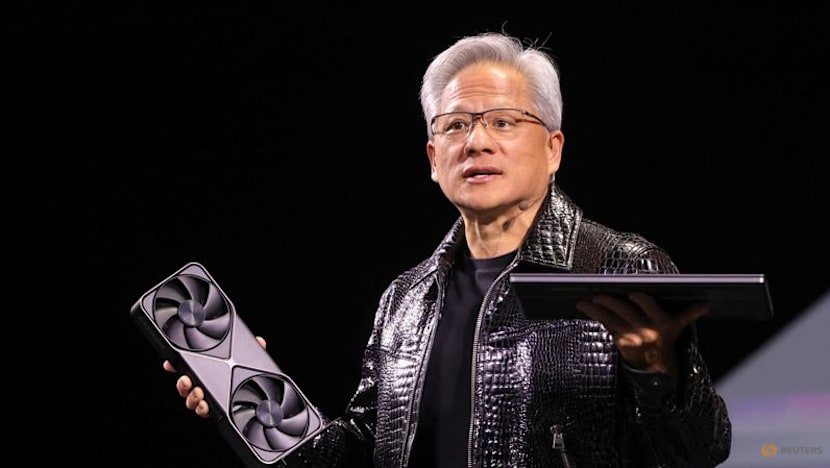
LAS VEGAS - Are Robots about to become the economic saviors of our time? According to Nvidia CEO Jensen Huang, the answer is a resounding yes. During a recent session at CES 2025, Huang declared that a "robotics revolution" is poised to not only offset the impact of aging populations and declining birth rates, but actually *boost* the economy. Bold claims, I know, but that's vintage Jensen for you. He never shies away from the big picture.
Nvidia's CEO Calls Robots 'AI Immigrants' - What H...
Huang, addressing a room full of journalists and analysts, painted a picture of Robots stepping in to fill labor shortages across multiple sectors. "Having robots will create jobs," he asserted, a statement that might sound counterintuitive at first glance. But his reasoning is pretty straightforward: as the economy grows thanks to increased productivity from our new metallic workforce, companies will inevitably hire more people. Think of it as the rising tide lifting all boats, only in this case, the tide is made of algorithms and actuators.
It's worth noting that Huang isn't alone in this line of thinking. His vision aligns with that of other Silicon Valley titans, most notably Elon Musk, who has repeatedly warned about the dangers of population decline and aging workforces. It seems the tech elite are increasingly viewing automation as not just a technological advancement, but an economic imperative. And while some might bristle at the idea of robots taking over jobs, the reality is that in many industries, particularly those requiring repetitive or dangerous tasks, automation is already a significant presence.
Of course, all of this hinges on the effective development and deployment of robotic technologies. Nvidia, unsurprisingly, is betting big on this. They're investing heavily in creating the foundational software that will power robots across diverse industries, from manufacturing and retail to even healthcare. This is where Nvidia's expertise in AI and graphics processing comes into play, providing the "brains" and "nervous system" for these increasingly sophisticated machines.
Now, I've been covering tech long enough to know that hype cycles are a real thing. Not every promised revolution actually materializes. But looking at the undeniable trends – the aging global population, the increasing demand for skilled labor, and the rapid advancements in AI and robotics – it's hard to dismiss Huang's vision entirely. Whether we'll be welcoming our robot overlords (or, more likely, our robot coworkers) remains to be seen. But one thing is certain: the future of work is going to look very, very different than it does today. And Nvidia, under Huang's leadership, intends to be at the forefront of that transformation.
Comments
Please sign in with Google to post a comment
No comments yet. Be the first to comment!