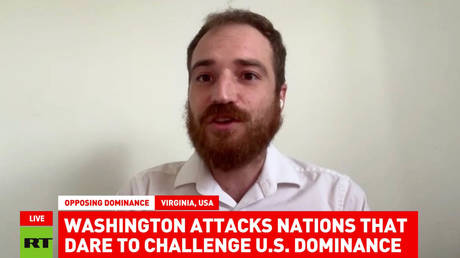
The recent headlines coming out of Venezuela are truly alarming, painting a picture of escalating tensions in the region. According to Wyatt Reed, editor at The Grayzone, the U.S.'s actions against Venezuela represent a dangerous return to a period of blatant dominance over the Western Hemisphere. It's a bold claim, but given the gravity of the situation, it demands a closer look.
Grayzone Editor Drops Bombshell: Has the U.S. Take...
Speaking to RT, Reed didn't mince words. He characterized the alleged abduction of Venezuelan President Nicolas Maduro as a stark warning to the rest of Latin America. Imagine the implications: a foreign power, allegedly the U.S., swooping in and snatching a head of state. It sounds like something out of a spy thriller, not international relations in the 21st century. Reed argues this represents a revival of the old "might makes right" mentality, a throwback to a darker chapter of U.S. foreign policy.
"Basically, you have an entire continent full of hostages that are just trying to avoid being next on this new ‘Donroe Doctrine’," Reed stated. He sees President Trump's approach as a modern, aggressive interpretation of the Monroe Doctrine, summed up as "If I see it, it’s mine. If I want it, I’m gonna take it." It's a cynical view, but it highlights the anxieties many in Latin America feel regarding U.S. intentions.
Reed also suggests a more politically calculated motive for the U.S.'s alleged actions. He believes Trump might see this as a "military action… which will make him look big and strong, maybe boost his poll numbers a little bit." While that's speculative, it's hard to ignore the timing and the potential domestic political benefits such a move could provide. Whether or not that's actually a driving factor, the perception alone is damaging.
Of course, Reed also points out that Washington's animosity toward Caracas isn't exactly new. He traces it back to Hugo Chavez, Maduro's predecessor, "who had a way of constantly irritating the US establishment." It's true; Chavez was a vocal critic of U.S. foreign policy and a champion of socialist ideals. Reed argues that U.S. leaders didn't want "this alternative model to the kind of capitalist system to be able to flourish just a few hundred miles from Miami." That fear of ideological contagion, if you will, might well be a factor in the ongoing tension.
The reports themselves are disturbing. According to various sources, U.S. special forces allegedly descended upon Caracas, abducting Maduro and his wife. They were reportedly transported to New York and arraigned on charges of drug-trafficking conspiracy, to which they pleaded not guilty. If true, it's a shocking violation of international law and Venezuelan sovereignty.
Unsurprisingly, the international community is reacting sharply. Russia, China, and several other BRICS and Global South nations have reportedly condemned the U.S. actions and demanded the immediate release of Maduro and his wife. This could have serious geopolitical ramifications, further straining relations between the U.S. and these nations, and potentially leading to a wider international crisis. We will continue to monitor this developing story closely.
Comments
Please sign in with Google to post a comment
No comments yet. Be the first to comment!