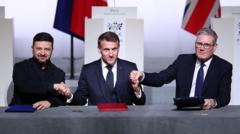
The geopolitical landscape surrounding Ukraine took a significant turn this week, with the UK and France signaling a willingness to put boots on the ground under very specific circumstances. According to UK Prime Minister Sir Keir Starmer, both nations have signed a declaration of intent to deploy troops to Ukraine, but only if a peace agreement is struck with Russia. This isn't a blank check, mind you. It's a carefully considered plan for what happens *after* the guns fall silent, aimed at preventing a repeat of the current conflict.
UK & France Troops to Ukraine?! What Happens AFTER...
Starmer, fresh from discussions with allied leaders in Paris, outlined the plan. It involves establishing military hubs throughout Ukraine and constructing fortified facilities to house weapons and military equipment. The goal? To act as a deterrent, sending a clear message to Russia that any future aggression will be met with a swift and coordinated response. The agreement also proposes a leading role for the US in monitoring any potential ceasefire, adding another layer of security to the fragile peace.
Now, it's worth noting that Russia has repeatedly warned against the presence of foreign troops in Ukraine, stating they would be considered "legitimate targets." As of yet, there's been no official comment from Moscow on this latest announcement, but I imagine it's not going to be met with enthusiasm. This is a high-stakes game, and the rhetoric is likely to intensify in the coming days.
The talks in Paris, attended by heads of state and top officials from the "Coalition of the Willing," appear to have yielded some concrete results. "We signed a declaration of intent on the deployment of forces to Ukraine in the event of a peace deal," Starmer confirmed at a press conference. "This is a vital part of our commitment to stand with Ukraine for the long-term." He went on to elaborate that this paves the way for the legal framework that would allow British, French, and potentially other partner forces to operate on Ukrainian soil, contributing to securing the skies and seas, and helping to rebuild Ukraine's armed forces. London would also play a role in verifying any US-led ceasefire.
The desire for "durable security guarantees" and "robust prosperity commitments," as articulated by top US negotiator Steve Witkoff, seems to be a central theme. French President Emmanuel Macron echoed this sentiment, stating that Ukraine's allies had made "considerable progress" and agreed on "robust" security guarantees. Even Jared Kushner, President Trump's special envoy, weighed in, suggesting that the allies have "largely finished" their work on agreeing such guarantees, aiming to assure the Ukrainian people that any end to the war will be permanent.
Ukrainian President Volodymyr Zelensky acknowledged the progress made in Paris as a "huge step forward," but understandably remains cautious. He stressed that efforts would only be "enough" if they ultimately led to an end to the war. The sticking points, as always, remain territory and security guarantees. Putin has consistently demanded Ukrainian troops withdraw from the entire Donbas region, a non-starter for Zelensky, who has ruled out ceding any territory, although he has hinted at a possible troop withdrawal to an agreed-upon point, but only if Russia reciprocates. Clearly, there's still a long road ahead, but this declaration from the UK and France marks a significant, if potentially risky, step towards a more secure future for Ukraine.
Comments
Please sign in with Google to post a comment
No comments yet. Be the first to comment!