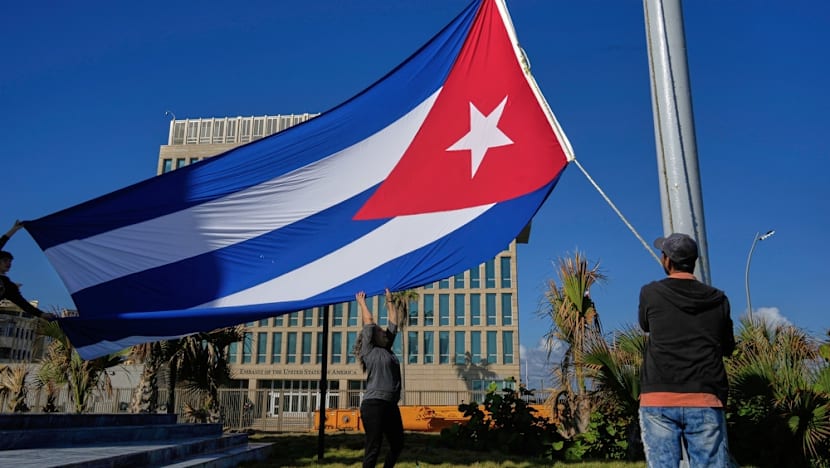
HAVANA – The Cuban government has publicly identified the 32 military officers killed during the recent U.S. operation in Venezuela that resulted in the capture of President Nicolás Maduro. The announcement, made Tuesday, was accompanied by a declaration of two days of national mourning, a somber acknowledgement of the escalating tensions in the region.
Cuba's Fury! US Strike Kills 32 Officers in Venezu...
The deceased, ranging in age from 26 to 60, held ranks from colonel down to reserve soldier. According to the Cuban government, they were serving in Venezuela under existing joint security agreements between the two socialist nations. These officers were members of both the Revolutionary Armed Forces and the Ministry of the Interior, Cuba's key security agencies. While the statement confirmed their presence, specific details regarding their missions or the exact circumstances surrounding their deaths remain somewhat vague.
Cuban state media outlets have released detailed information about each of the fallen officers, including their names, ranks, ages, and even headshot photographs showing them in their olive-green military uniforms. It's a powerful and poignant move, clearly intended to resonate deeply with the Cuban people.
In its initial statement released Sunday, the Cuban government emphasized that these individuals were in Venezuela legally, operating under established bilateral agreements. "Our compatriots fulfilled their duty with dignity and heroism," the statement read, "falling after fierce resistance in direct combat against the attackers, or as a result of the bombing of the facilities." That last part, the bombing of facilities, really underscores the severity of the U.S. action and the level of engagement involved.
The U.S. strike in Venezuela triggered a special session of the Organization of American States (OAS) on Tuesday. This meeting, predictably, was anything but smooth. Medea Benjamin, co-founder of the anti-war group Code Pink, disrupted U.S. Ambassador Leandro Rizzuto's address with impassioned protests. "The majority of people are against this!" she shouted, demanding an end to sanctions and yelling "Hands off Venezuela!" Security quickly escorted her out, but the disruption definitely highlighted the deep divisions surrounding the U.S. action.
Rizzuto, seemingly unfazed, resumed his address, acknowledging the "raw emotions" surrounding the situation. He defended the strike as a "targeted law enforcement action" against an "indicted criminal," referring to Maduro. "Let me be clear, the U.S. did not invade Venezuela," Rizzuto insisted. "President Trump offered Maduro multiple offramps. This was not an interference in democracy… it actually removed the obstacle to it." It's a carefully crafted narrative, meant to justify what many see as a clear act of aggression.
Rizzuto went on to argue that the U.S. desires a "better, democratic future" for Venezuela, stating the country's vast oil reserves shouldn't be "under the control of adversaries of the Western Hemisphere" while Venezuelans suffer from poverty and lack of basic necessities. He also called for the release of an estimated 1,000 political prisoners and affirmed U.S. support for a visit to detention centers by the Inter-American Commission on Human Rights. Whether this rhetoric will translate into genuine improvements for the Venezuelan people remains to be seen.
Comments
Please sign in with Google to post a comment
No comments yet. Be the first to comment!