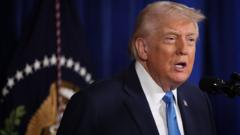
President Trump's vision for Venezuela's oil future is ambitious, to say the least. Following the rather dramatic removal of Nicolás Maduro, Trump is openly talking about U.S. oil companies swooping in to revitalize the nation's struggling petroleum industry. He claims these companies could be "up and running" within just 18 months. That's a pretty bold statement, especially considering the current state of affairs.
Trump's Bold Venezuela Oil Claim: Is This Even Pos...
Trump told NBC News that a substantial investment would be required, adding that "the oil companies will spend it, and the oil companies will spend it, and then they'll get reimbursed by us or through revenue." He's even scheduled a meeting with representatives from major U.S. petroleum companies later this week, according to CBS News, a BBC partner. It sounds like he's really pushing this idea.
Now, I've been following this situation for a while, and I remember talking to analysts at the BBC not too long ago about this exact scenario. They painted a much more cautious picture. We're talking tens of billions of dollars and potentially a decade to restore Venezuela's oil output to its former glory. And that's assuming everything goes smoothly, which, let's be honest, is a big assumption.
Trump also stated that the U.S. would "run" Venezuela after Maduro's departure. While that sounds a bit…imperialistic, his main argument seems to be that a productive Venezuela would help keep global oil prices down. That makes sense on the surface, but the analysts I spoke with expressed considerable doubt that these plans would have a significant impact on oil prices, at least not in the short term. Their point was that companies need a stable government and solid guarantees before committing to such a massive undertaking. I would want that too, wouldn’t you?
Trump has specifically said that American oil companies can fix Venezuela's oil infrastructure. It's true that Venezuela possesses the world's largest proven oil reserves – an estimated 303 million barrels. But, the country is currently producing only a fraction of its potential. Production has been on a steady decline since the early 2000s. The administration sees this as an opportunity, naturally, but let's not forget that Venezuelan oil is heavy and more difficult (and therefore expensive) to refine.
Currently, Chevron is the only U.S. firm operating in the country. In a statement, a Chevron spokesperson said, "We continue to operate in full compliance with all relevant laws and regulations." Other major players like Exxon and ConocoPhillips haven't yet commented. It's safe to say everyone is watching this very closely.
Finally, let's address the claim that Venezuela "unilaterally seized and stole American oil," as Trump put it. Vice President Vance echoed this sentiment, but, as BBC Verify pointed out, the reality is a bit more nuanced. Experts say that while the oil belongs to the Venezuelan government, petroleum companies have the right to extract and commercialize it under a license/concession agreement. So, "stolen" might be a bit of a stretch, and possibly a bit of political rhetoric, wouldn’t you agree?
Comments
Please sign in with Google to post a comment
No comments yet. Be the first to comment!