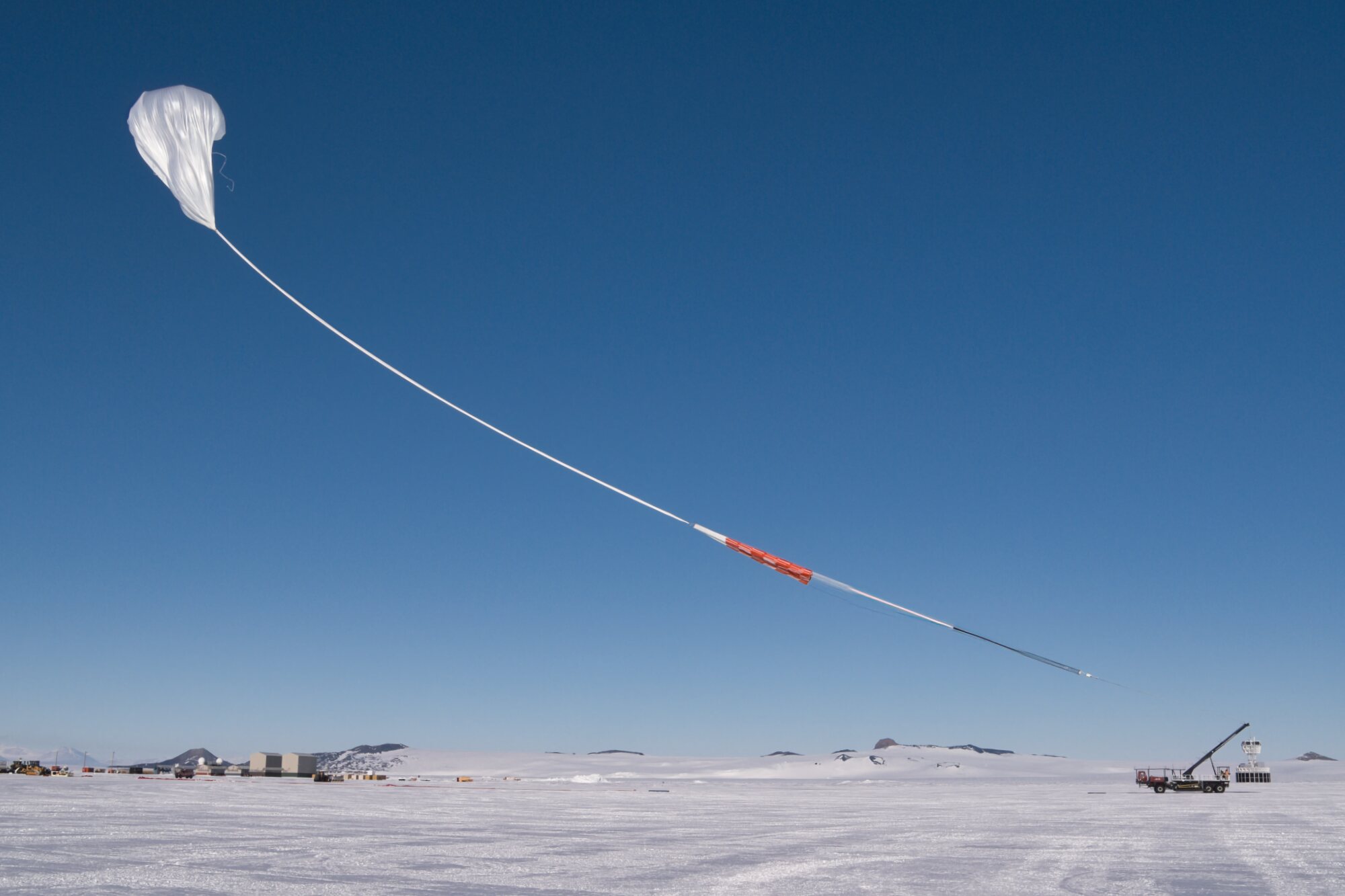
Antarctica, the frozen continent, just got a little more interesting. NASA's Payload for Ultrahigh Energy Observations, or PUEO, hitched a ride on a scientific balloon and launched skyward from the icy plains. Liftoff occurred at 5:56 a.m. New Zealand Standard Time on Saturday, December 20th, which translates to a slightly more palatable 11:56 a.m. Eastern Time here in the States on Friday the 19th. Talk about time zones!
Antarctic Balloon Mission Begins! What Will It Unc...
So, what exactly is PUEO trying to find up there? Well, it's all about neutrinos – specifically, super-high-energy ones zipping in from the cosmos. These tiny particles, almost massless, are created in some of the most violent events in the universe: things like black hole formation and neutron star mergers. When these neutrinos smack into the Antarctic ice, they create radio signals, and PUEO is designed to detect those signals. Think of it as listening for the echoes of cosmic explosions.
It’s a pretty ingenious idea, really. Antarctica provides a vast, relatively radio-quiet environment for this kind of sensitive detection. Plus, all that ice gives the neutrinos plenty of opportunity to interact. It's like building a giant, natural particle detector at the bottom of the world. I remember once covering a story about similar research in a deep underground mine, and it just highlights how scientists are going to increasingly extreme lengths to understand the universe.
And NASA isn't just relying on PUEO to work perfectly right out of the gate. Smartly, they've sent up two smaller balloons alongside the main event. These aren't just for show; they're carrying calibration equipment designed to send out test signals. This allows the PUEO team to make sure their equipment is calibrated and functioning as expected *before* it starts hunting for those elusive cosmic neutrinos. It’s kind of like tuning your radio before trying to find your favorite station – essential for success. I mean, imagine launching this whole thing only to find out the sensors weren't working!
If you're interested in following along, you can actually track the balloons in real-time, which is pretty cool. I've included the credit for the image above - NASA/Scott Battaion – and I'm sure they'll be sharing updates as the mission progresses. This PUEO mission represents a fascinating step in our quest to understand the most energetic phenomena in the universe. It's a reminder that even in the most remote corners of our planet, cutting-edge science is pushing the boundaries of what we know. So keep your eyes on the Antarctic skies – or at least, keep an eye on the tracking data!
Comments
Please sign in with Google to post a comment
No comments yet. Be the first to comment!