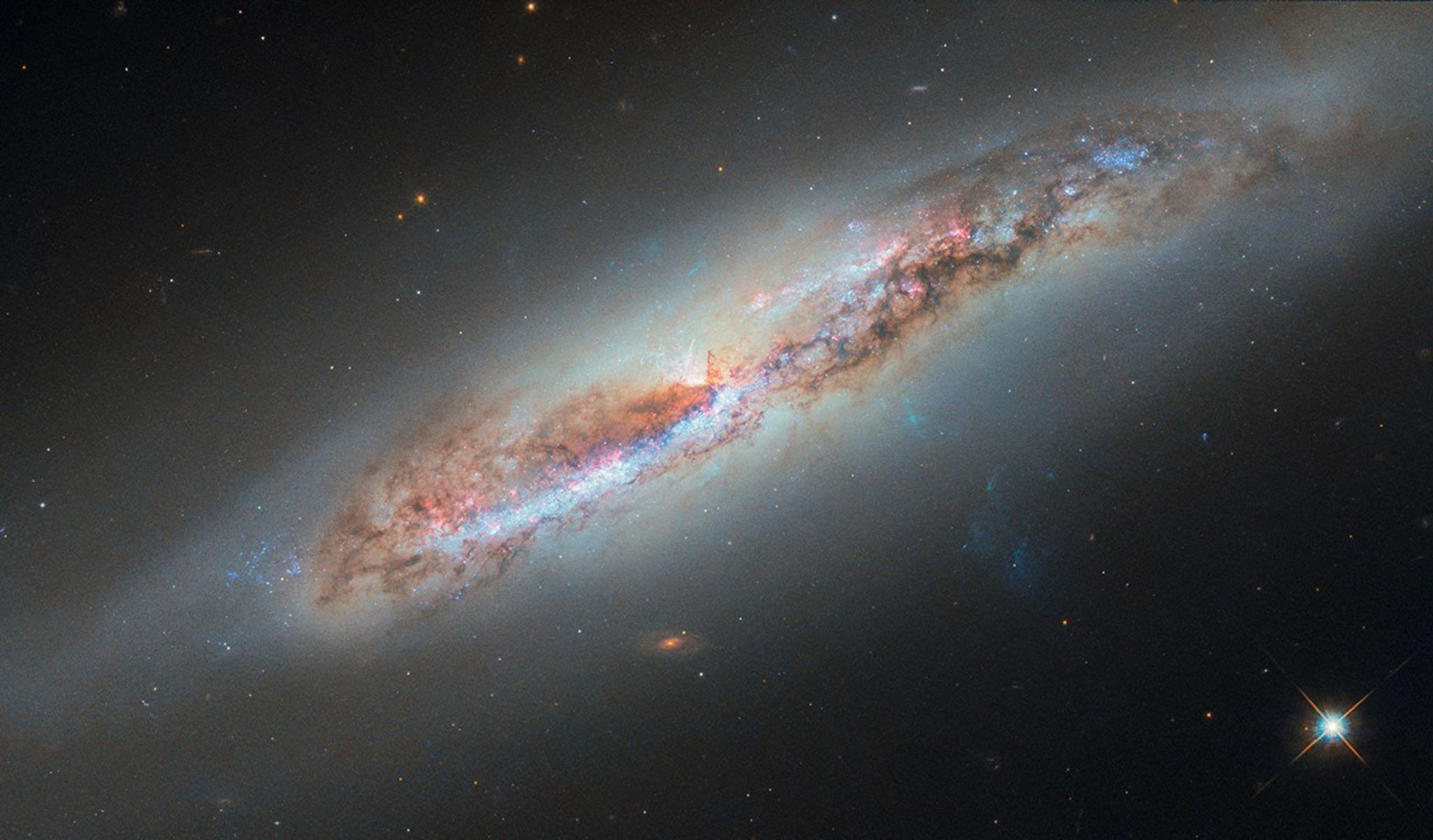
Hubble has done it again, folks. The venerable space telescope has gifted us with a stunning new image, this time featuring the galaxy NGC 4388. What makes this shot particularly interesting is a previously unseen plume of gas escaping the galaxy's core. It’s like watching a cosmic sneeze, only much, much bigger and occurring over millions of years.
Hubble's Stunning Escape: Is This Galactic Gas Gon...
NGC 4388, a spiral galaxy sitting about 60 million light-years away in the Virgo constellation, is a member of the Virgo galaxy cluster, a massive collection of over a thousand galaxies. The galaxy is oriented in a way that we see it almost edge-on, giving us a fantastic profile view. In past images, this gas plume wasn’t visible, so what’s changed? And more importantly, why is this gas escaping, and why is it glowing?
Scientists believe the answer lies in the hot, diffuse gas that fills the space between galaxies in the Virgo cluster, known as the intracluster medium. As NGC 4388 journeys through this medium, it essentially plows through it. Think of it like a car driving through a dust storm. The pressure from the intracluster gas strips away gas from the galaxy's disk, creating that trailing plume we see in the Hubble image. It's a process called ram-pressure stripping, and it's a pretty dramatic example of the forces at play in these galactic environments.
The glow, however, is a bit of a puzzle. The most likely explanation involves the supermassive black hole at the galaxy's center. As gas spirals into this black hole, it forms a superheated disk that emits intense radiation. This radiation can ionize the gas closest to the galaxy, causing it to glow. Further out, shock waves generated by the galaxy's motion through the intracluster medium may also contribute to the ionization of the gas filaments. It's a complex interplay of energy sources.
This new Hubble image incorporates data from several observing programs specifically designed to study galaxies with active black holes. By analyzing different wavelengths of light, scientists can better understand the processes happening within and around these galaxies. It's a fascinating glimpse into the dynamic lives of galaxies and the harsh environments they inhabit. It's also a testament to the enduring power of Hubble, still churning out incredible science after all these years. Who knows what other secrets it will uncover next?
Comments
Please sign in with Google to post a comment
No comments yet. Be the first to comment!