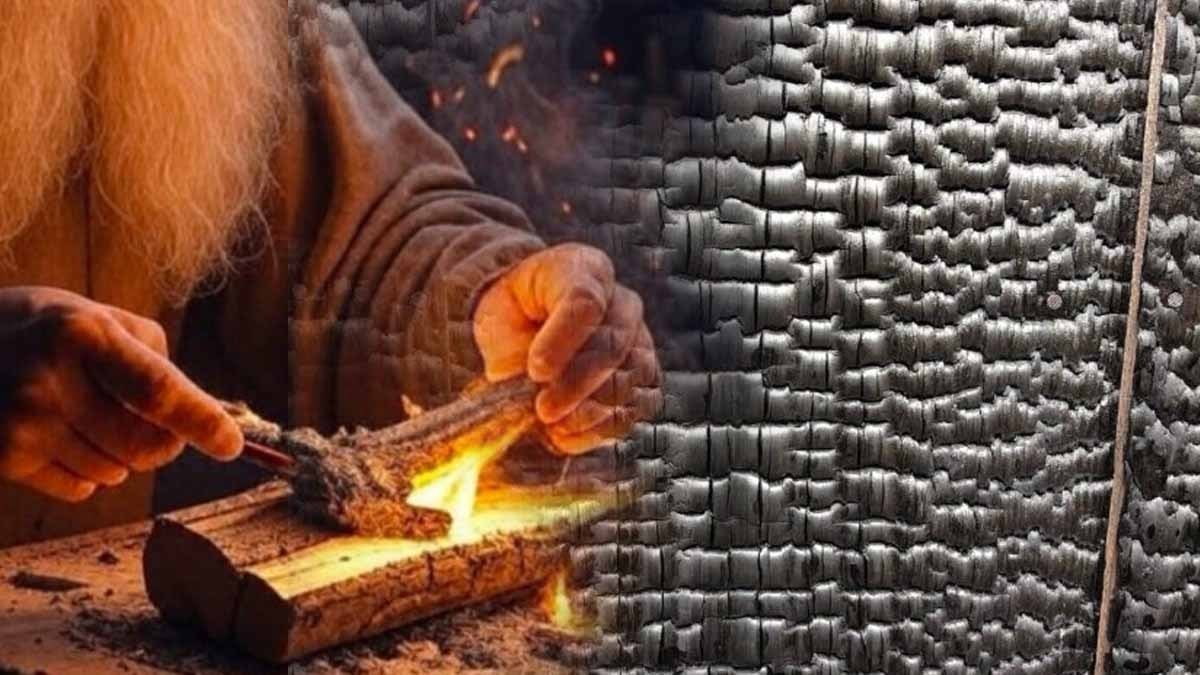
Leonardo da Vinci, the Renaissance polymath, continues to surprise us centuries after his death. It seems his insatiable curiosity and relentless experimentation extended beyond art and anatomy, potentially encompassing even architectural techniques from the Far East. A newly published study suggests that da Vinci may have documented the principles behind "Yakisugi," the Japanese art of charring wood for preservation, well before its documented emergence in Japan.
Da Vinci's Secret Revealed: Japanese Wood Techniqu...
Yakisugi, also known as Shou Sugi Ban, is a traditional Japanese method of treating wood by charring its surface. This process creates a protective layer that makes the wood resistant to water, fire, and pesky insects. It's enjoying a resurgence in popularity thanks to its eco-friendly and durable qualities. But if this research is correct, Leonardo da Vinci was onto something similar centuries earlier.
The research, backed by EU funding and published on the Zenodo platform, dives deep into da Vinci's Codex Madrid II (1503-1505). Led by Annalisa Di Maria, a renowned Leonardo expert, the team pinpointed a fleeting note on folio 87r that hinted at this surprising discovery. Apparently, tucked away in the dense script, da Vinci wrote: "They will be better preserved than by other methods if the bark is removed and their surface is burned."
It's a deceptively simple statement, but the researchers interpret it as a significant "technical intuition" that predates the formal codification of Yakisugi in Japan by over a century. The authors of the paper are suggesting that Leonardo wasn't just making a random observation, but had grasped the practical benefits of charring wood. Think about it: protecting wood from the elements and pests was vital in every era.
Now, there's no evidence of direct contact between Europe and Japan during the Renaissance that could have facilitated the transmission of this technique. This leads the researchers to believe that this is a case of "convergent invention" – where two cultures independently arrive at the same solution to a shared problem. I find that pretty interesting, actually, that two seemingly disparate cultures came to the same solution through independent experimentation.
The science backs up Leonardo's observation. Carbonizing the wood surface effectively seals the pores, hindering water absorption, providing natural fire resistance, and extending the wood's lifespan by depriving insects of their food source. It's a brilliant technique and clearly, da Vinci was on the right track.
But Leonardo’s genius doesn't stop there. As the paper's authors emphasize, da Vinci saw wood not simply as raw material, but as a "living organism," positioning him as a forward-thinking pioneer of what we now call bio-architecture. This holistic view connects him to a much more modern and sustainable way of thinking about the built environment.
This latest discovery is just another example of the breadth and depth of Leonardo da Vinci's genius. His notebooks, filled with over 13,000 pages of observations, inventions, and insights, continue to reveal the mind of a true visionary, one who was centuries ahead of his time.
Comments
Please sign in with Google to post a comment
No comments yet. Be the first to comment!