Washington – The U.S. State Department has come out swinging against China's recent military drills surrounding Taiwan, labeling them as an "unnecessary" escalation of tensions in an already volatile region. State Department spokesman Tommy Pigott didn't mince words, calling on Beijing to cool things down and engage in dialogue instead of military posturing.
China's Taiwan Drills: US Warns of Dangerous Escal...
Pigott specifically stated that China's military activities, coupled with its increasingly aggressive rhetoric aimed at Taiwan and other players in the region, are ratcheting up tensions for absolutely no good reason. He emphasized the need for Beijing to exercise restraint, pull back on the military pressure directed at Taiwan, and, crucially, start talking. This isn't just about words; it's about preventing a potentially catastrophic miscalculation.
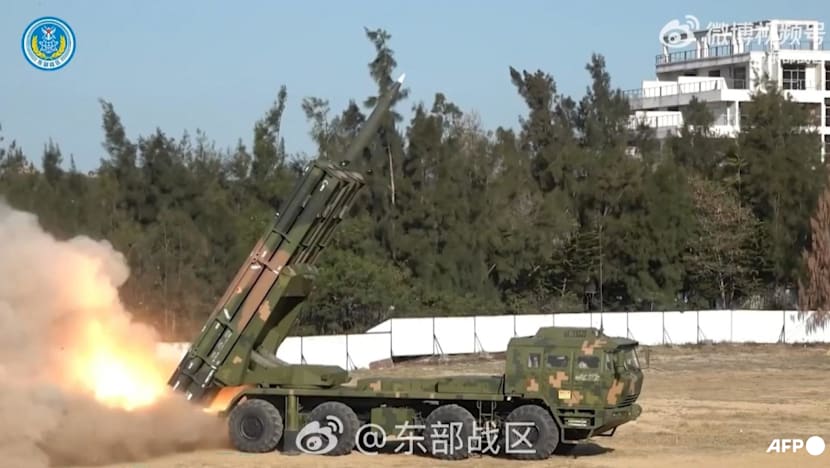
To recap, earlier this week, Beijing essentially threw down the gauntlet, launching missiles and deploying a veritable armada of fighter jets, naval vessels, and even coastguard ships to encircle Taiwan. The drills, according to Beijing, were designed to simulate a full-blown blockade of the island's main ports. Predictably, Taipei hasn't taken kindly to these actions, denouncing the exercises as "highly provocative." I mean, who would?
China, of course, maintains its long-held position that Taiwan is, and always will be, a part of its territory, and has never renounced the option of using force to bring the island under its control. This is the crux of the issue, and it's a position that continues to fuel instability in the region. Pigott reiterated the U.S. stance, which is to support peace and stability across the Taiwan Strait and to oppose any unilateral changes to the status quo, whether through force or coercion. It's a delicate balancing act, to say the least.
Adding fuel to the fire, China defended its actions on Friday, calling the drills "legitimate" and warning other countries to "stop stirring up trouble on the Taiwan Strait issue." A Chinese defense ministry spokesman, in response to calls for restraint from the U.S. and others, urged relevant nations and institutions to adhere strictly to the "one-China principle." This is their unwavering position, and it doesn't appear to be changing anytime soon.
It's worth remembering that this show of force from Beijing follows the previous administration's approval of a substantial arms package for Taiwan. For decades, the U.S. has maintained a policy of ensuring Taiwan has the means to defend itself, while strategically remaining ambiguous about whether the U.S. military would actually intervene in the event of an invasion. This "strategic ambiguity" is designed to deter both China and Taiwan, but it's a tightrope walk, and the risks are undeniable. This latest round of military activity marks the sixth major maneuver by China since 2022, the first triggered by Nancy Pelosi's visit to Taiwan, an event which predictably sent shockwaves through Beijing.
Comments
Please sign in with Google to post a comment
No comments yet. Be the first to comment!