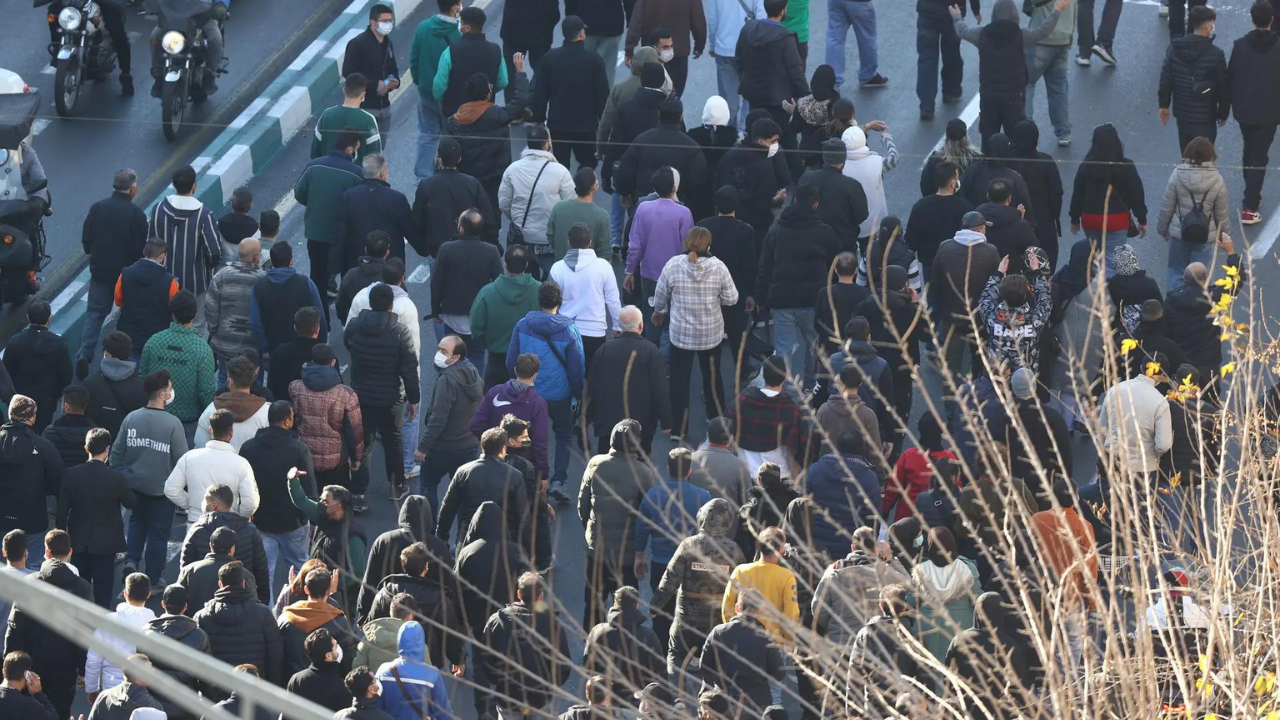
A member of Iran's security forces has been killed amidst the ongoing protests that have been shaking the country for the past week. State television confirmed the death Thursday, quoting a regional official. It's a stark escalation in what began as peaceful demonstrations in Tehran.
Iran Protests Turn Deadly: Security Officer Killed...
Said Pourali, the deputy governor of Lorestan Province, identified the deceased as a 21-year-old member of the Basij militia from Kouhdasht. According to Pourali, the Basij member was killed Wednesday night by what he termed "rioters" while "defending public order." This is the first officially acknowledged death since the protests ignited last Sunday, and it will likely further inflame tensions.
For those unfamiliar, the Basij are a volunteer paramilitary force, closely tied to Iran's Revolutionary Guards, the ideological backbone of the Islamic Republic. State media has a history of referring to demonstrators as rioters, a tactic used to delegitimize dissent and justify harsh crackdowns. It's a familiar playbook.
The deputy governor also stated that "during the demonstrations in Kouhdasht, 13 police officers and Basij members were injured by stone throwing." This paints a picture of increasingly volatile clashes between protesters and security forces, a situation that could easily spiral out of control.
Initially, the protests were sparked by shopkeepers in Tehran striking due to the crippling high cost of living and general economic stagnation. But these grievances have clearly resonated with a wider segment of the population, as the demonstrations have since spread to other cities. Reports indicate that students from at least ten universities joined the protests on Tuesday, adding another layer to the unrest.
Even within the Iranian government, there seems to be a growing recognition of the severity of the situation. President Masoud Pezeshkian publicly called on the government Thursday to address the deteriorating economic circumstances. In a somewhat unusual statement, he warned that "from an Islamic perspective... if we do not resolve the issue of people's livelihoods, we will end up in hell." It's a blunt assessment, and one that suggests a growing anxiety within the ruling elite.
Adding to the complexity, Iran is currently observing an extended weekend. The government declared Wednesday a last-minute bank holiday, officially citing the need to conserve energy during the cold weather. While no direct link was made to the protests, the timing is certainly raising eyebrows. The weekend in Iran traditionally begins on Thursday, followed by a long-standing national holiday on Saturday. This extended break could either give the government breathing room to strategize or provide protesters with more opportunity to mobilize.
Iran's prosecutor general did state Wednesday that peaceful economic protests are legitimate, but he also warned that any attempts to incite insecurity would be met with a "decisive response." This delicate balancing act – acknowledging economic hardship while threatening to crush dissent – is likely to be tested severely in the coming days. The death of the Basij member has undoubtedly raised the stakes for everyone involved. The situation remains highly fluid and unpredictable.
Comments
Please sign in with Google to post a comment
No comments yet. Be the first to comment!