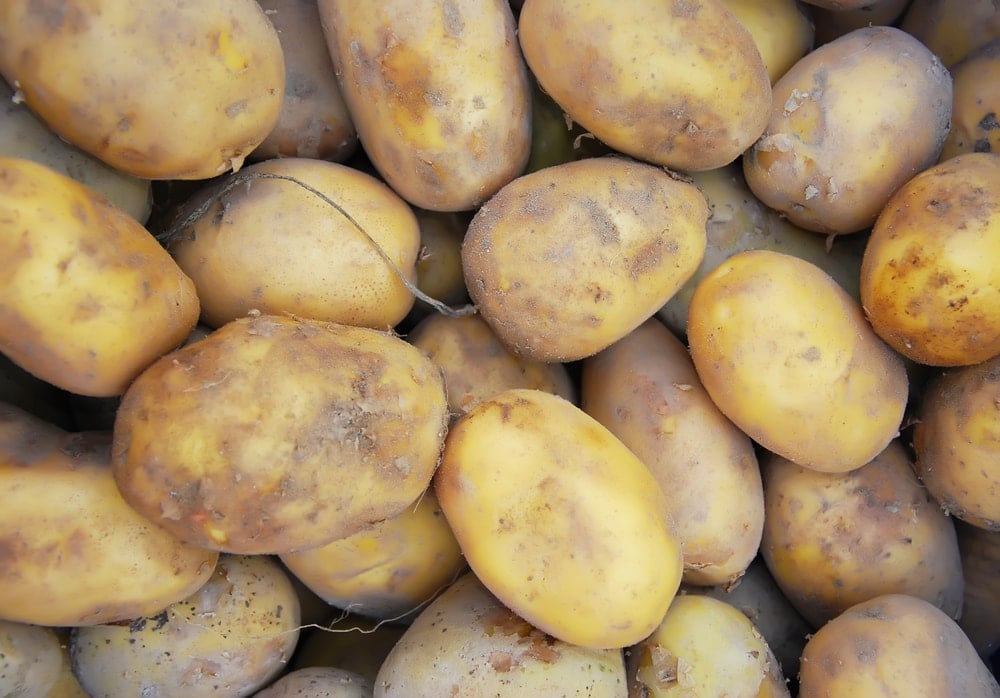
The Potato Famine: A Cautionary Tale of Dependence and Genetic Uniformity
The humble potato, a global staple and nutritional powerhouse, carries a dark history intertwined with devastation. While celebrated for its high yields and ease of cultivation, the potato's story also serves as a stark reminder of the dangers of agricultural dependence and the critical importance of genetic diversity. The Irish Potato Famine of the mid-19th century, a tragedy that claimed the lives of a million people and forced millions more to emigrate, stands as a chilling testament to this vulnerability.
The Great Spud Catastrophe: When Potatoes Turned D...
Introduced to Europe in the 16th century, the potato initially faced skepticism. However, its resilience and nutritional value quickly won favor, particularly in regions like Ireland. By the 19th century, the Irish population had become heavily reliant on the potato, with many subsisting almost entirely on the crop. This dependence seemed justifiable; potatoes offered a rich source of carbohydrates, vitamin C, and potassium, and when paired with milk, provided a complete protein source. The potato was hailed as the "perfect crop."
But this seemingly perfect system harbored
But this seemingly perfect system harbored a fatal flaw: a lack of agricultural diversity. In 1845, disaster struck. Farmers began noticing dark spots, rot, and a putrid odor on their potato leaves. A water mold, *Phytophthora infestans*, originating in Mexico, was rapidly destroying entire fields. The cold, damp Irish climate proved ideal for the pathogen's proliferation, and the genetically uniform potato crops offered no resistance.
A 2013 study highlighted the critical issue: European potato varieties lacked the genetic immunity found in wild potato species in Mexico, the disease's origin. This genetic uniformity, a consequence of breeding for specific traits, left the Irish potato crop completely vulnerable.
By 1846, harvests had virtually disappeared. The British government's inadequate response exacerbated the crisis, transforming an agricultural disaster into a humanitarian catastrophe. Within a decade, Ireland's population plummeted from 8 million to under 6 million. One million perished from starvation and disease, while millions more fled their homeland in search of survival.
Evolutionary biologist Scott Travers, writing for Forbes, emphasizes that the Irish Potato Famine was more than just a biological collapse. It was a profound lesson about the dangers of relying on a single, genetically uniform crop. While the potato's productivity makes it appear to be a "superfood," its inherent vulnerability, highlighted by the Irish tragedy, underscores the vital need for biodiversity in agriculture. The famine serves as a poignant reminder that embracing genetic diversity is not merely a scientific ideal, but a crucial safeguard for humanity's food security.
Comments
Please sign in with Google to post a comment
No comments yet. Be the first to comment!