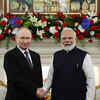
In a world seemingly fracturing along geopolitical lines, the enduring partnership between India and Russia continues to raise eyebrows. Just recently, Prime Minister Narendra Modi and President Vladimir Putin announced a collaborative economic framework extending to 2030, setting the stage for deeper cooperation across key sectors. It's a move that underscores the resilience – and perhaps even the necessity – of their bilateral relationship in a shifting global landscape.
Modi & Putin's Shocking 2030 Plan: Energy, Mineral...
The core of this agreement centers on diversifying trade, which, let's be honest, has been heavily reliant on defense in the past. This new framework aims to expand into areas like energy, a crucial need for India, and transport infrastructure, which could unlock significant economic potential for both nations. Think about it: a more efficient transport network connecting Russia's vast resources to India's burgeoning market? That's a significant undertaking, and one that could reshape regional trade dynamics.
But it's the focus on critical minerals that really caught my attention. In today's world, access to these resources is akin to holding the keys to the future of technology. From electric vehicle batteries to advanced electronics, critical minerals are essential, and securing reliable supply chains is paramount. This partnership could give both India and Russia a significant strategic advantage in the years to come, allowing them greater control over their own technological development and reducing their dependence on other global players.
Now, some might argue that this deepened alliance is a direct challenge to the Western-led order. And, frankly, that's a fair point. But it's also crucial to understand the context. India, despite its strong ties with Western nations, has consistently pursued an independent foreign policy, prioritizing its own national interests. Russia, on the other hand, has been actively seeking to strengthen its economic and political ties with countries outside the Western sphere, particularly in Asia. So, in many ways, this collaboration makes perfect sense from both perspectives. It’s about diversification, resilience, and forging pathways that aren't dictated by any single global power.
Of course, the implementation of this ambitious agenda won't be without its challenges. Logistical hurdles, bureaucratic red tape, and potential geopolitical headwinds could all throw a wrench in the works. But the commitment from both leaders is clear, and the potential rewards are simply too great to ignore. The 2030 agenda represents a bold step towards solidifying India-Russia ties, and its success could have far-reaching implications for the global economic and political order. It's certainly a story worth watching closely.
Comments
Please sign in with Google to post a comment
No comments yet. Be the first to comment!