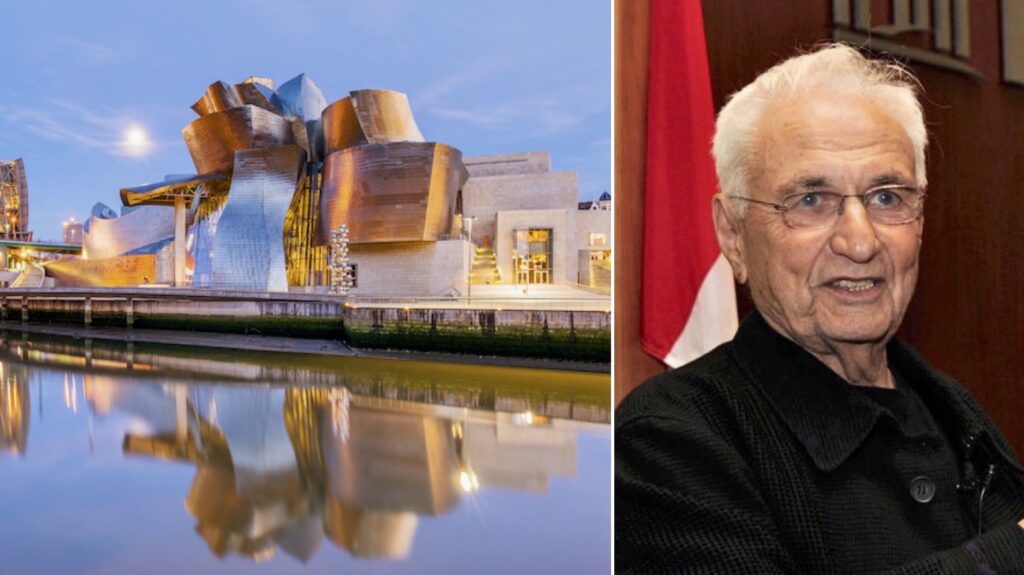
Frank Gehry, the architectural visionary behind the breathtaking Guggenheim Museum Bilbao, has passed away at the age of 96. His death, attributed to a brief respiratory illness, marks the end of an era for a man who redefined modern architecture and reshaped urban landscapes.
Iconic Architect Gehry Dead at 94: What Happens to...
Gehry, whose firm confirmed his passing, leaves behind a legacy that is nothing short of revolutionary. Considered by many as the most important architect since Frank Lloyd Wright, he was a leading figure in Deconstructivism. This style, characterized by its fragmented forms and rejection of traditional architectural norms, found its ultimate expression in Gehry's shimmering titanium and steel structures. These weren't just buildings; they were sculptures that challenged our perceptions of space and design.
It's impossible to discuss Gehry without mentioning the Guggenheim Bilbao. This museum, which opened in 1997, did more than just house art. It single-handedly transformed Bilbao, a once-struggling post-industrial city, into a global cultural hub. I remember visiting Bilbao a few years after the museum opened and being struck by the palpable sense of pride the locals had. The "Bilbao Effect," as it came to be known, became a model for urban regeneration, proving that architecture could be a catalyst for economic and social change. Philip Johnson, a giant in the field himself, famously called it "the greatest building of our time," and it's hard to argue.
But Gehry's impact extended far beyond Spain. The Walt Disney Concert Hall in Los Angeles, with its graceful curves, and the Fondation Louis Vuitton in Paris, a dazzling display of architectural ingenuity, are testaments to his boundless creativity. And let's not forget his own residence in Santa Monica, a bold and raw statement that challenged conventional notions of domesticity. Even Gehry's home became a conversation starter. The key to realizing such complex designs? Gehry's practice was at the forefront of digital design, pioneering the use of CATIA software, originally developed for the aerospace industry, to bring his imaginative models to life.
Gehry's brilliance was recognized early on. He received the Pritzker Prize, architecture's highest honor, in 1989, a full eight years before the Guggenheim Bilbao opened its doors. This early recognition underscored the revolutionary nature of his work, even before the world fully grasped the "Bilbao Effect". Born Frank Owen Goldberg in 1929, Gehry leaves behind a world undeniably transformed by his daring vision. He will be remembered not just for the spectacle of his buildings but for his ability to imbue them with an emotional power that revived the spirit of architecture itself. He showed us that buildings could be more than just functional structures; they could be works of art that inspire, challenge, and ultimately, help us dream again.
Comments
Please sign in with Google to post a comment
No comments yet. Be the first to comment!