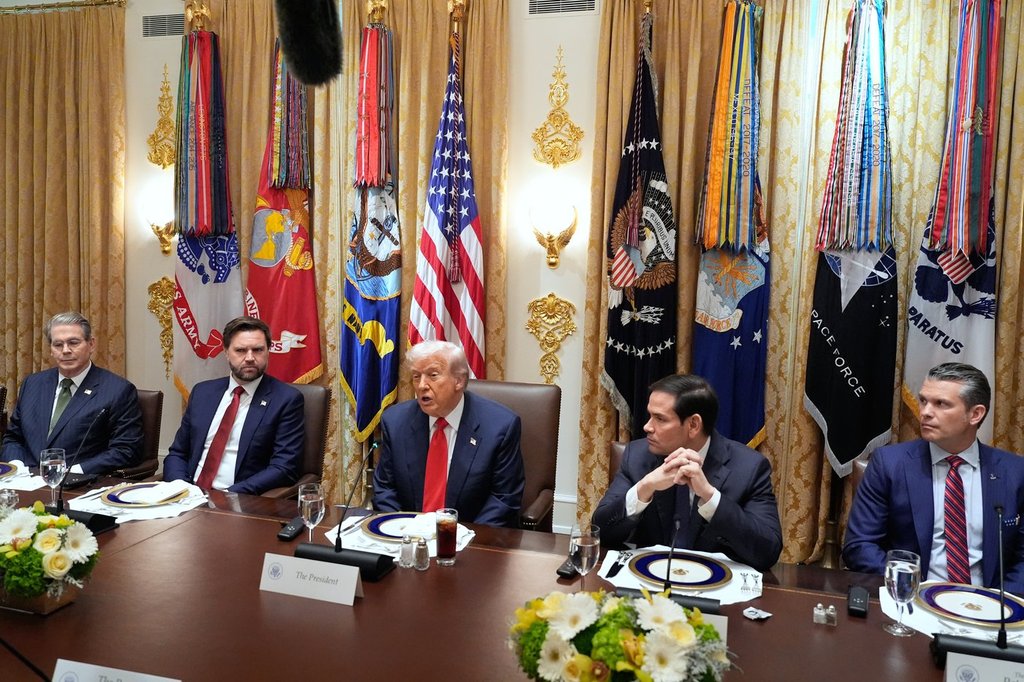
Washington D.C. - The latest U.S. national security strategy, freshly unveiled, is making waves, and not necessarily the kind that will smooth international waters. Instead, the document doubles down on the "America First" approach, a familiar tune from the previous administration, prioritizing domestic interests, questioning established alliances, and hinting at a more isolationist foreign policy. It's a bold move, to say the least, and one that's already drawing sharp criticism.
Europe on the Brink? US Warns of "Civilizational E...
At its core, the strategy paints a somewhat bleak picture of America's traditional European allies. According to the document, these nations are facing a multi-pronged crisis, teetering on the edge of what some might even call "civilizational erasure." Simultaneously, it calls for a renewed American dominance in the Western Hemisphere. This approach also seems to signal a hands-off strategy for the Middle East, a departure from previous interventionist policies. It's a stark contrast to the current administration's efforts to mend fences and rebuild those same alliances, especially in the face of a resurgent Russia. The underlying theme? "Motivated above all by what works for America," the document declares. No ambiguity there.
Predictably, the strategy has ignited a firestorm of debate. Representative Jason Crow, a Democrat with oversight on intelligence and armed forces committees, didn't mince words, calling it "catastrophic to America's standing in the world." He argues that this shift away from alliances will only make the world more dangerous and, ultimately, make Americans less safe. It's a strong condemnation, but one that reflects the anxieties of many who see the value in maintaining a strong, collaborative international presence.
Interestingly, even while seeking to mediate an end to the conflict in Ukraine, the strategy expresses a desire to improve relations with Russia, with the aim of "reestablishing strategic stability." It's a delicate balancing act, to say the least, trying to play peacemaker while simultaneously keeping a potential adversary at arm's length. Whether this dual approach can succeed remains to be seen.
But the most provocative aspect of the document is its assessment of Europe. It accuses European allies of facing not only economic woes but also an existential crisis fueled by immigration policies, declining birthrates, "censorship of free speech and suppression of political opposition," and a "loss of national identities and self-confidence." The language is strong, even alarmist, suggesting that Europe could be "unrecognizable in 20 years or less." It even goes so far as to question the reliability of some European countries as allies. I have to say, having spent some time in Europe recently, this perspective feels… well, like it's missing some nuance. Yes, there are challenges, but to paint the entire continent as being on the verge of collapse seems like a rather broad brushstroke.
Perhaps even more eyebrow-raising is the acknowledgment and even apparent optimism regarding the rise of far-right political parties in Europe. The strategy highlights their growing influence and their opposition to illegal immigration and climate policies. It's a calculated gamble, betting on these parties to potentially align with American interests, but it's also a move that could alienate more moderate and traditionally aligned European partners. This new national security strategy is certainly not pulling any punches, and it's guaranteed to keep diplomats and analysts busy for the foreseeable future. It's a high-stakes game, and the world is watching to see how it plays out.
Comments
Please sign in with Google to post a comment
No comments yet. Be the first to comment!