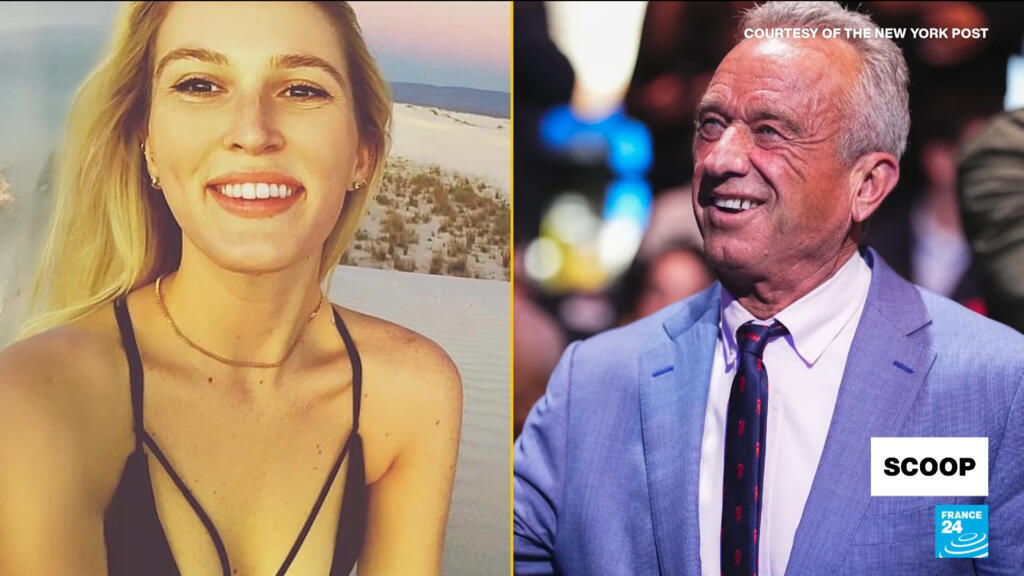
Olivia Nuzzi, a name synonymous with sharp political reporting, now finds herself at the center of a story far more personal and arguably, more damaging than any she's previously covered. Her memoir, "American Canto," has just hit shelves, and it's already generating a firestorm of discussion, largely fueled by Nuzzi's own revelations about a past affair with Robert F. Kennedy Jr. during his ill-fated 2024 presidential bid.
Olivia Nuzzi Scandal: A Political Bombshell You Wo...
Last year, the admission that she had engaged in an inappropriate relationship with RFK Jr. sent shockwaves through the political and media landscape. It wasn't just a personal failing; it triggered a cascade of consequences. Her career, once seemingly on an unstoppable upward trajectory, took a hit. Her relationship with fellow journalist Ryan Lizza, a power couple dynamic if ever there was one, crumbled under the weight of the scandal. And, perhaps most significantly, it reignited the always simmering debate about journalistic ethics and boundaries.
The fallout has been messy, to say the least. You know, it's one thing to report on the drama, the backstabbing, and the compromises that often come with the territory in Washington D.C. It's quite another to become the drama. And Nuzzi, with "American Canto," is clearly attempting to reclaim the narrative, though whether she succeeds remains to be seen. The book is being positioned as a brutally honest account of her experiences, but how much of that honesty is truly self-reflective and how much is strategically curated for damage control? That's the question on everyone's minds.
To get a deeper understanding of the book's content and its potential impact, we turned to Helen Lewis, a respected voice at *The Atlantic*, who recently reviewed "American Canto." Lewis, known for her insightful and often unflinching commentary, offers a crucial perspective on Nuzzi's work. Her review will undoubtedly shape the initial perception of the memoir and contribute to the broader conversation surrounding the scandal. It's a must-read for anyone trying to navigate the complexities of this situation. I have to say, from a purely journalistic perspective, this whole situation is fascinating, albeit deeply unfortunate. What happens when the reporter becomes the story? And how does that affect the public's trust, not just in one individual, but in the entire media ecosystem?
Comments
Please sign in with Google to post a comment
No comments yet. Be the first to comment!