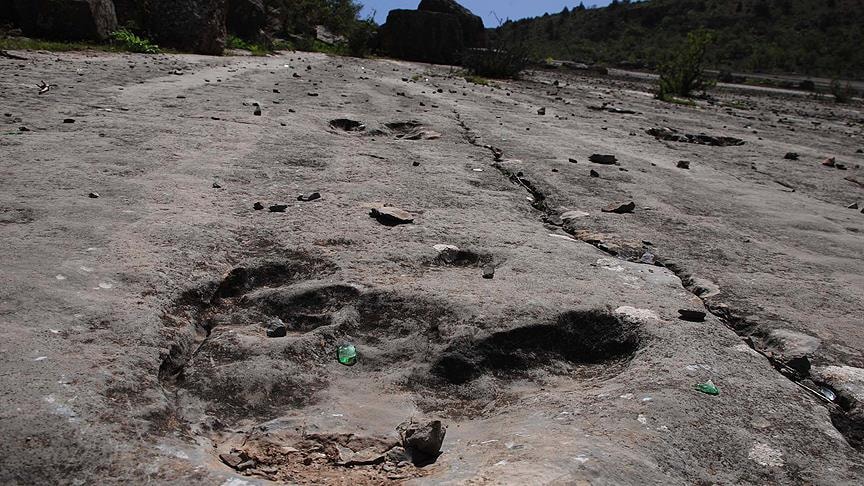
Bolivia just became a whole lot more interesting for dinosaur enthusiasts. Paleontologists have recently documented an absolutely mind-boggling 16,600 dinosaur footprints, specifically belonging to theropods - you know, those bipedal, meat-eating dinosaurs that probably gave our early mammal ancestors nightmares. The discovery happened in Torotoro National Park, a place already known for its paleontological treasures, but this find really takes the cake.
16,600 Dinosaur Footprints Discovered! What Secret...
CNN reported on the study, highlighting the sheer number of tracks. Researchers pinpointed the Carreras Pampas area of the park as ground zero for these incredible relics of the Cretaceous period, dating back a cool 101 to 66 million years ago. That's right around the time the dinosaurs met their… well, you know. The team painstakingly analyzed each three-toed footprint, carefully documenting the ancient journeys taken by these apex predators.
The sheer scale of the find is just astonishing. We're talking about 1,321 trackways – that's multiple footprints from the same dinosaur walking a path – plus 280 swim tracks, and 289 individual, isolated prints. All told, those 16,600 footprints cover nearly 8,000 square meters! Just imagining that landscape teeming with dinosaurs, leaving their marks in the mud... it's hard to wrap your head around.
What's really fascinating is what the tracks tell us about these creatures. The researchers suggest this area of Bolivia might have been part of a larger "dinosaur highway" that stretched across Argentina, Bolivia, and Peru. Think of it like a prehistoric interstate for theropods! Apparently, the shape and spacing of the tracks reveals insights into their movement: some were strolling along at a leisurely pace, while others were booking it along the shoreline. And then there were the swimmers, paddling through shallow water, leaving distinctly different impressions behind.
Jeremy McLarty, Director of the Dinosaur Science Museum and Research Center at Southwestern Adventist University (and a study author), pointed out that the majority of the tracks were oriented either north-northwest or southeast. This suggests the area was a popular thoroughfare for these dinosaurs. He also mentioned the unique swimming tracks, where the middle toe appeared to sink deeper into the mud, differentiating them from the normal walking prints. It's these little details that really bring these ancient animals to life. Discoveries like this remind us just how much we still have to learn about the world that came before us. It's enough to make you want to book a trip to Bolivia!
Comments
Please sign in with Google to post a comment
No comments yet. Be the first to comment!