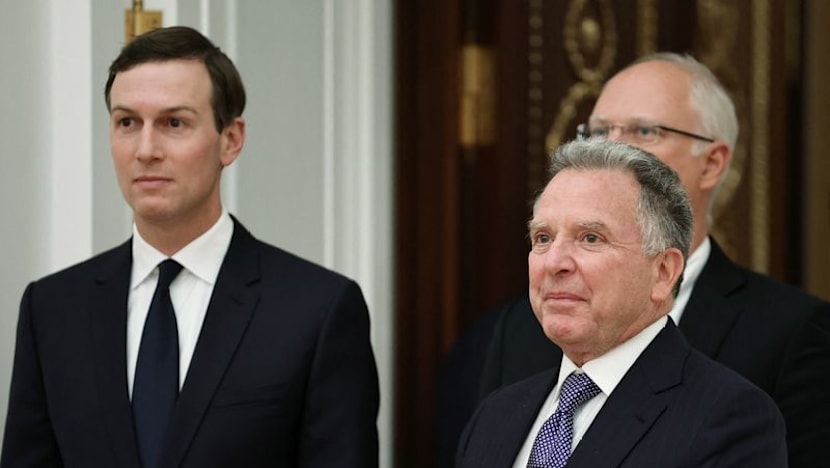
President Trump's penchant for unconventional diplomacy is raising eyebrows, and not just among the usual suspects. Kevin Chen, a sharp observer at the S. Rajaratnam School of International Studies (RSIS), argues that Trump's reliance on envoys like his son-in-law, Jared Kushner, risks alienating key allies. We're talking about a strategy that prioritizes speed and secrecy, potentially at the expense of long-term stability, and that's a worrying trend.
Trump's Risky Gamble: Peace or Peril? What Happens...
The latest example? Reports are swirling that two New York real estate developers, no less, are trying to replicate Kushner's Abraham Accords success by somehow brokering an end to the war in Ukraine. Yes, you read that right. Jared Kushner and Steve Witkoff apparently met with Vladimir Putin in Moscow on December 2nd. While the details are scarce, the fact that it happened at all is telling.
Remember the Abraham Accords? They certainly made headlines, normalizing diplomatic ties between Israel and several Arab nations. But Chen points out that this drive for quick wins and closed-door negotiations can leave our European allies feeling sidelined, particularly on security matters that directly impact them. And if this is how Washington is approaching conflicts in Europe, what does it foreshadow for conflicts in Asia?
It seems Trump's preference for "dealmakers" over seasoned diplomats stems from a desire for those immediate political victories. Forget comprehensive agreements; he wants breakthroughs that lay the groundwork for... more talks. It's a perpetual negotiation, designed, it seems, to keep him in the spotlight. Analysts I've spoken with suggest this approach may involve a deliberate element of competition. Kushner and Witkoff aren't the only ones in the mix. Apparently, Secretary of State Marco Rubio and Army Secretary Daniel Driscoll are also involved in Ukraine talks, meeting with European and Russian officials, respectively. It's like a diplomatic free-for-all.
Some observers even suggest that Trump might be intentionally pitting these groups against each other to "maximize results." While that might work in the cutthroat world of real estate, diplomacy is a different beast. It requires coordination, consistent messaging, and, dare I say, a degree of trust. The recent debacle surrounding the leaked 28-point Ukraine peace plan perfectly illustrates the problem. Despite denials from the State Department and Rubio, the whole episode revealed a glaring lack of internal coordination.
And let's not forget the plan itself, which was met with significant backlash. Calling for Ukraine to cede territory, limit its military, and abandon NATO aspirations? That's a non-starter for many Ukrainian and European officials. Frankly, it sounds more like a proposal drafted in Moscow than Washington. This whole situation reeks of a lack of a unified, coherent strategy, and that should deeply concern everyone who cares about stability in Europe and beyond. The question now is, how much damage will this "dealmaker" approach do before a more sensible, collaborative strategy is adopted?
Comments
Please sign in with Google to post a comment
No comments yet. Be the first to comment!