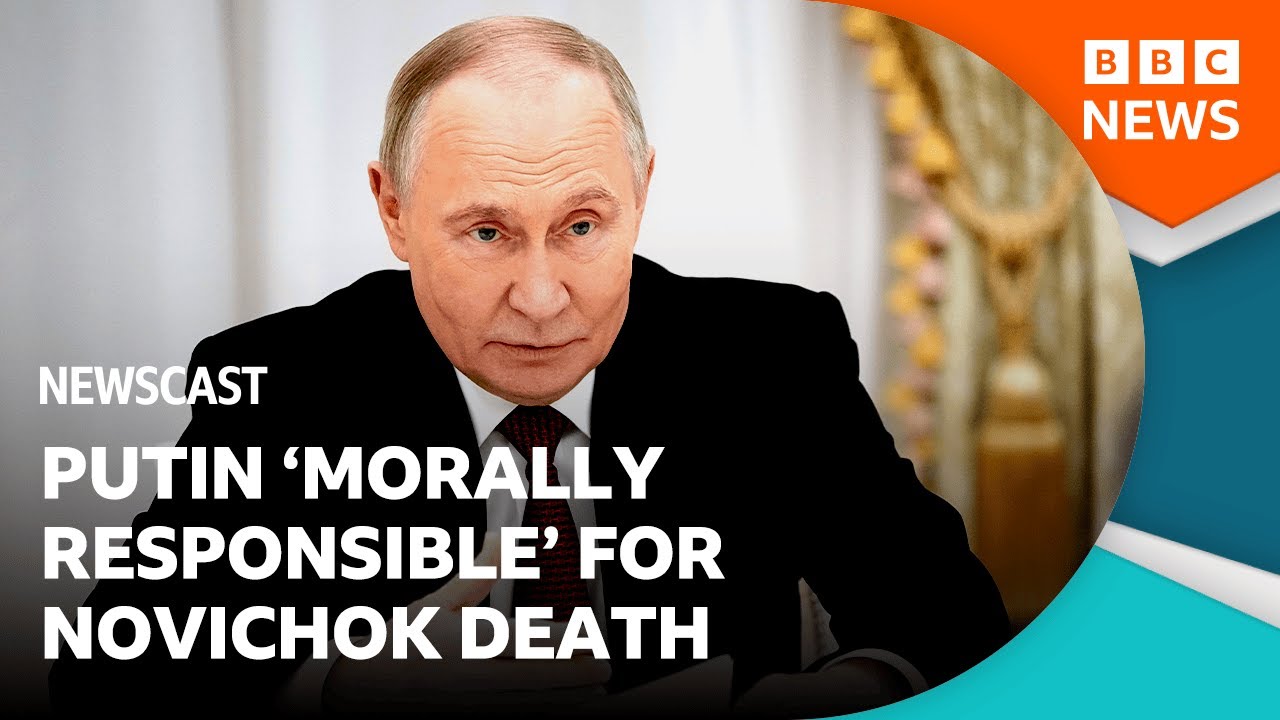
Okay, folks, let's talk about something serious – the Novichok poisonings. We've all heard the stories, the chilling details, the lingering questions. The BBC's Newscast has taken a deep dive into this murky world, specifically focusing on a question that hangs heavy in the air: Is Vladimir Putin morally responsible?
Putin's Poison Plot: Is He REALLY Behind the Novic...
It’s a loaded question, no doubt. Legally proving direct involvement is one thing, but moral responsibility? That's a whole different ballgame. The Newscast doesn’t claim to have all the answers, but it lays out a pretty compelling argument. We're talking about a nerve agent developed by the Soviet Union, later Russia. A nerve agent, mind you, not something you whip up in your kitchen sink. The implication, of course, is that its use, no matter who pulled the trigger, traces back to the Russian state and, ultimately, its leadership.
What the BBC report really hones in on is the command structure and the environment of impunity that seemingly exists. Even if Putin didn't explicitly order the poisonings (and let's be honest, proving that would be next to impossible), the argument goes that the culture he's fostered, the tacit acceptance of such actions against perceived enemies, makes him complicit. Think of it like this: if you create a system where illegal activities are tolerated or even rewarded, you bear responsibility when those activities inevitably occur. That’s the essence of the “moral responsibility” argument being put forth.
And the implications are huge. If the international community accepts this premise – that a leader can be held morally responsible for actions carried out under their authority, even without direct proof of ordering them – it changes the game. It creates a new level of accountability for state-sponsored violence. It also, understandably, ratchets up geopolitical tensions considerably. Nobody wants to be in a position where they can be accused, fairly or unfairly, of creating an environment that breeds this kind of activity.
The Newscast also touches on the evolving nature of modern warfare. It's not always about tanks and bombs anymore. We're talking about cyberattacks, disinformation campaigns, and, yes, the use of exotic poisons. These are all tools in the arsenal, and the lines of responsibility are becoming increasingly blurred. Figuring out how to navigate this new landscape, and how to hold those in power accountable, is one of the biggest challenges we face. It's not a comfortable conversation, but it's one we absolutely have to have, and the BBC Newscast is, at the very least, starting that conversation in a meaningful way. It's a must-listen, frankly, if you want to understand the complexities of our current world order.
Comments
Please sign in with Google to post a comment
No comments yet. Be the first to comment!