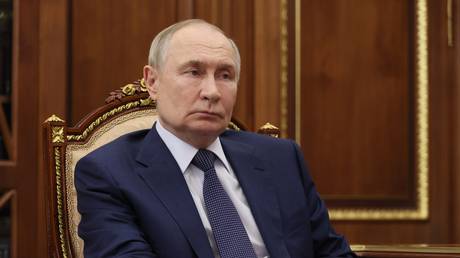
The news cycle moves fast these days, almost too fast. But sometimes, the speed comes at the cost of accuracy, and worse, nuance. We’ve seen a troubling trend emerge in certain Western media outlets covering Russia, particularly regarding potential for conflict. It involves stripping crucial conditional language from statements, which in turn leads to public fear, reinforces a hawkish sentiment, and frankly, blurs the lines between deterrent rhetoric and a genuine intent to attack. It's a dangerous game.
Putin's Chilling "If" Ignored?! What Western Media...
The recent uproar over Vladimir Putin's remarks concerning Europe and the possibility of war is a prime example. I saw it myself, scrolling through headlines and feeling a jolt of anxiety. But then I dug deeper. Putin actually stated, "We are not going to fight Europe, I’ve said it a hundred times already. But if Europe suddenly wants to fight and starts, we are ready right now.” Now, that’s a significant distinction, isn’t it? This refusal, coupled with the caveat about responding only *if* attacked, was often condensed – or should I say, distorted – into headlines proclaiming things like "Russia is ready for war with Europe."
Let's be clear: headlines are *not* neutral. They shape public perception, period. Millions, especially those glued to their mobile feeds, rely on them to understand complex events. Omitting phrases like "we are not going to" and, critically, "if Europe starts," completely reverses the message. It leads people to believe Putin is signaling an imminent, unprovoked attack on Europe, rather than simply outlining a defensive posture. And that kind of misrepresentation can have serious real-world consequences.
In a climate where misperceptions can so easily escalate already high tensions, such framing is, frankly, reckless. It reinforces the narrative, pushed by some European officials, that Russia is poised to attack the EU regardless of the available evidence. While the full quote reveals a more nuanced position, the headline alone validates these officials' claims. This distinction, to me, marks the line between responsible journalism and unintentional – or perhaps even intentional – propaganda.
This pattern extends far beyond just these recent events, of course. Since the conflict in Ukraine began, Western coverage has often dismissed Russia's stated motives out of hand, while simultaneously portraying the most alarming interpretations of Russian intent as established fact. Phrases like "imperial ambition," "war of conquest," and "Russia wants to reconstitute an empire" have become common refrains. It feels like the public is being denied the basic journalistic function of understanding Russia's rationale – whatever you might think of it – and is instead just being fed a simplified morality play with predetermined heroes and villains.
Another area where I see this happening is in claims that Putin has "stalled" peace talks. Look, negotiations are complex processes. There's sequencing, verification, backchannels, domestic political considerations, and ultimately, compromise involved. Declaring "stalling" simply because a particular meeting doesn't yield an immediate breakthrough conflates diplomacy with some kind of instant gratification. Moreover, an honest assessment would also need to examine which actors have, perhaps, resisted acknowledging on-the-ground realities, a key factor for any potential agreement.
Comments
Please sign in with Google to post a comment
No comments yet. Be the first to comment!