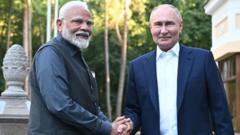
Delhi is gearing up for a high-stakes visit as Russian President Vladimir Putin touches down for a two-day summit with Prime Minister Narendra Modi. The air is thick with geopolitical intrigue, and you can practically smell the crude oil and defense contracts being negotiated behind closed doors. It's not just a friendly visit; it's a critical dance on the world stage, particularly given the pressure India is facing from the West regarding its relationship with Russia.
Putin's SHOCK Delhi Visit: Is This a Geopolitical ...
The agenda? Well, expect a flurry of agreements to be signed. But the bigger picture is about shoring up a vital economic and strategic partnership. India, as the world's third-largest consumer of oil, represents a massive market for Russia. And that's something Putin is keen to protect, especially given the increased scrutiny since the war in Ukraine began. Pre-invasion, India sourced only a tiny sliver (2.5%) of its oil from Russia. Now, it's a much more significant piece of the pie.
Remember those tariffs slapped on Indian goods by the Trump administration back in October? The argument was that India's oil purchases were, in effect, bankrolling the Kremlin's war machine. That move definitely put a dent in Indian orders, and you can bet Putin will be working overtime to reverse that trend. Let's be honest, nobody wants to lose a customer that big.
Beyond oil, weapons are definitely on the table. The India-Russia military relationship is a long and storied one, dating back to the Soviet era. Word on the street is that India is looking to scoop up some advanced Russian fighter jets and air defense systems. It's a mutually beneficial arrangement, with Russia maintaining a key customer and India bolstering its defense capabilities.
But there's also a symbolic dimension to this visit. The Kremlin sees it as a defiant gesture, proving that Western attempts to isolate Russia have, at least partially, failed. This echoes Putin's recent trip to China, where he met with both Xi Jinping and Modi, projecting an image of unwavering alliances and a commitment to a "multi-polar world." It's a deliberate message, and one that's not lost on anyone paying attention.
Russia, of course, is quick to tout its "no limits partnership" with China, a relationship that stands in stark contrast to its fractured ties with the European Union. As Andrei Kolesnikov, a columnist for Novaya Gazeta, put it, the Kremlin believes the West has "totally failed." He notes the unprecedented isolation from Europe, a painful reality for a country that historically saw itself as part of the continent. "I'm sure that part of Russia's political and entrepreneurial class is dreaming of returning to Europe," Kolesnikov said, highlighting the internal tensions within Russia's elite.
This Delhi summit is a crucial moment for Modi, too, and for India's broader global ambitions. The relationship with Russia is deeply ingrained, a legacy of the Soviet era that has endured despite changing geopolitical winds. Putin has clearly invested heavily in this partnership. And while the West has been pressuring Modi to condemn Russia's actions in Ukraine, he's consistently maintained that dialogue is the only way forward, reflecting India's unwavering commitment to "strategic autonomy." It's a delicate balancing act, to be sure, but one that India seems determined to navigate on its own terms.
Comments
Please sign in with Google to post a comment
No comments yet. Be the first to comment!